
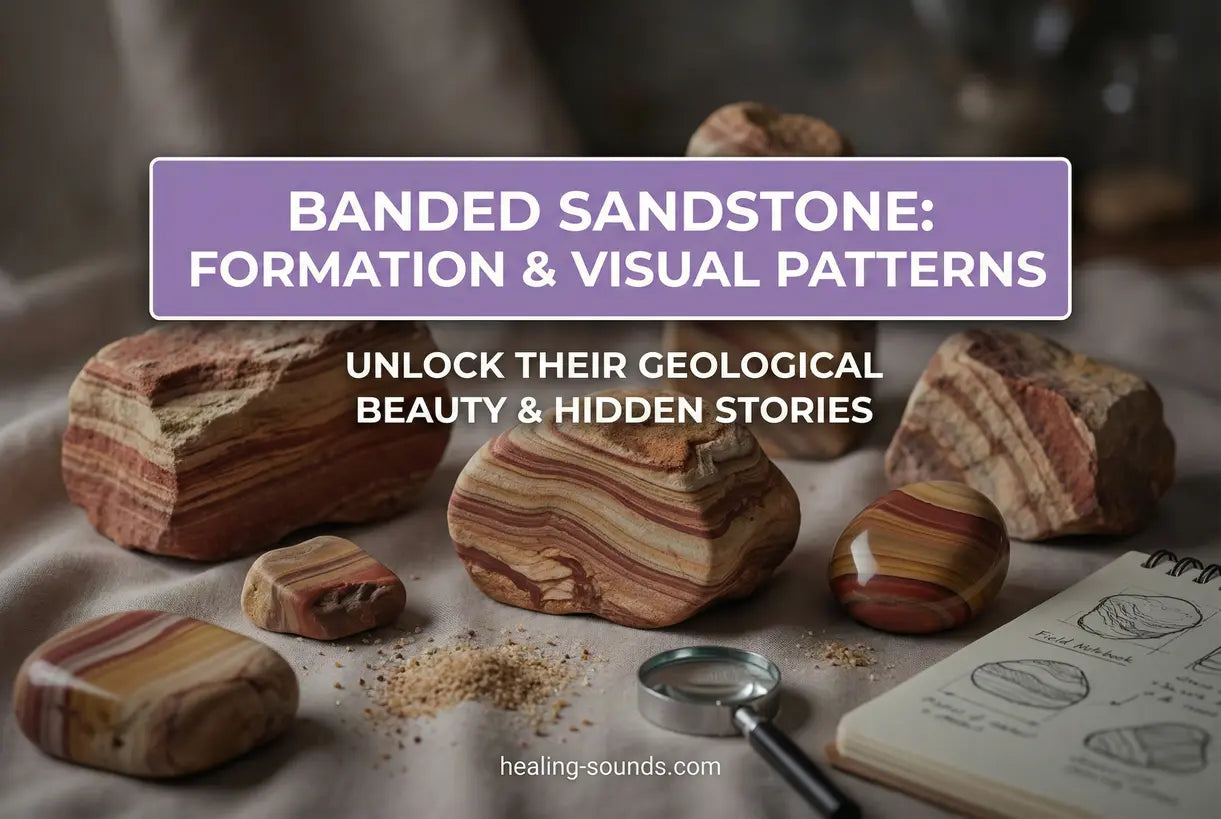
Nature often acts as the ultimate artist, and nowhere is this more evident than in the mesmerizing layers of banded sandstone. For geology enthusiasts and crystal collectors alike, these rocks tell a vibrant story of Earth's history, captured in swirling reds, oranges, and earthy browns. Whether you are exploring a canyon or admiring a polished specimen on your desk, the visual patterns in sandstone offer a glimpse into millions of years of geological evolution.
In this article, we will delve into the fascinating formation of banded sandstone, exploring the science behind its unique striations. We will also guide you on how to identify these geological wonders and discuss their uses in both home decor and spiritual practices. Prepare to uncover the secrets hidden within these ancient geological layers.

What is Banded Sandstone?
Banded sandstone is a sedimentary rock defined by its distinctive, rhythmic color layers. Unlike uniform rock formations, these stones display visible bands that can range from hair-thin lines to thick, bold stripes. These patterns are not just surface-level decorations; they run through the stone, created by variations in mineral content and sediment deposition over eons.
The visual appeal of these rocks makes them highly sought after for architectural use and lapidary arts. When cut and polished, sandstone patterns reveal landscape-like sceneries, leading some to refer to them as "picture sandstones."
The Formation of Banded Sandstone
Understanding how is banded sandstone formed requires a journey back in time. The process begins with the deposition of sand grains, typically in ancient dunes, riverbeds, or seabeds. Over time, pressure cements these grains into solid rock. However, the banding itself is often a secondary process known as rhythmic precipitation or Liesegang banding.
Groundwater rich in minerals, particularly iron oxides and hydroxides, permeates the porous sandstone. As this water moves through the rock, it encounters chemical changes that cause the dissolved minerals to precipitate out of the solution. This periodic precipitation creates concentric rings or parallel bands of color within the rock matrix. This is distinct from the primary sedimentary bedding, which represents the original layers of sand deposition.
Visual Patterns and Identification
The primary allure of these rocks lies in their aesthetics. To the untrained eye, a rock might just look "striped," but a closer look reveals complex visual patterns in sandstone. The colors are largely dictated by the specific minerals present. Iron typically creates reds, oranges, and yellows, while manganese can introduce blacks and purples.

How to Identify Banded Sandstone
Identifying banded rock properties involves looking at texture and hardness. Since it is composed of sand grains (quartz and feldspar), the rock will feel gritty to the touch, like sandpaper. The bands should appear embedded within the stone rather than painted on the surface.
Key Identification Tips
- Texture: Gritty, grainy feel characteristic of sedimentary rocks.
- Hardness: Generally measures 6-7 on the Mohs scale due to quartz content, though the cementing material may be softer.
- Pattern Consistency: Look for continuous layers or rhythmic rings (Liesegang rings) that penetrate the stone.
Bringing Earth's Layers Home
Beyond their scientific interest, pieces of banded sandstone serve as grounding elements in interior design and spiritual spaces. Their earthy tones evoke stability and connection to the natural world. For those looking to incorporate this energy into their home, specific decor items can serve as beautiful focal points.
For example, the Green Sandstone Fu Incense Burner utilizes the natural texture of sandstone to create a serene atmosphere, perfect for meditation or simply adding a touch of geological charm to a desk.

Brûle-encens Fu en grès vert | Décoration de bureau Prosperity
$48.90 $69.90
Invite the grounding energy of sandstone into your space with this unique green incense burner, ideal for spiritual and decorative settings.
Explore ProductWhere is Banded Sandstone Found?
Banded sandstone formations create some of the world's most breathtaking landscapes. The American Southwest is famous for these formations, with locations like "The Wave" in Arizona and various canyons in Utah displaying spectacular types of banded rocks. These massive outcrops allow us to see the banding on a grand scale, illustrating the immense geological forces at play.

For collectors, smaller specimens can be found in regions with high iron content in the groundwater. While national parks often prohibit collecting, there are many public lands and private mines where rockhounding for these distinct stones is permitted. Always verify local regulations before removing any rocks from a site.
Metaphysical Properties and Jewelry
In the realm of crystal healing, sandstone is often viewed as a "stone of creativity" and cohesion. The bands represent the layers of one's life working together in harmony. It is believed to help with clarity of thought and grounding excess energy. Because of these properties, along with its durability and beauty, sandstone and similar banded stones are frequently fashioned into beads and jewelry.
Wearing these stones, such as in a Blue Sandstone Lava Rock Spiritual Bracelet, allows you to carry the stabilizing energy of the earth with you. Similarly, traditional designs like the Unisex Yak Bone Dzi Bead Turquoise Protection Bracelet often complement the aesthetics of banded stones, merging cultural history with geological beauty.
Wearable Geological Beauty

Wear this blue sandstone and lava rock bracelet to showcase the beauty and metaphysical qualities of banded/colored sandstone every day. Learn more ➔

Bracelet de protection unisexe en perles turquoises et os de yak
$199.90
$289.90
Experience the energy of blue sandstone and turquoise with this protective bracelet, blending tradition and geological charm. Learn more ➔
Conclusion
Banded sandstone is more than just a rock; it is a testament to the dynamic processes that shape our planet. From the intricate chemical reactions that form its bands to its striking presence in vast canyons, this stone captures the imagination of scientists and spiritual seekers alike. By understanding the formation of banded sandstone and learning to identify its unique patterns, you deepen your connection to the Earth beneath your feet.
Whether you are displaying a specimen in your home or wearing it as jewelry, let the enduring layers of sandstone remind you of the beauty of resilience and the artistry of nature.
Frequently Asked Questions about Banded Sandstone
Banding is primarily caused by the precipitation of minerals, such as iron oxides, from groundwater moving through the porous rock. This creates rhythmic patterns known as Liesegang rings or bands distinct from the original sedimentary layers.
It is commonly found in arid regions with a history of sand dunes and mineral-rich groundwater. Notable locations include the Colorado Plateau in the USA (Utah and Arizona), parts of Australia, and other desert environments globally.
You can identify it by its gritty, sandy texture and distinct, often concentric or parallel layers of color (reds, browns, yellows). It should scratch glass with difficulty (quartz hardness) but may be brittle.
Uses include architectural stone for buildings and paving, decorative coasters, bookends, and sculptures. It is also used in lapidary arts for jewelry and is valued in metaphysical circles for grounding.
The primary minerals are quartz and feldspar (sand grains). The banding colors are usually caused by hematite (red), limonite (yellow/brown), goethite, and sometimes manganese oxides (black).


