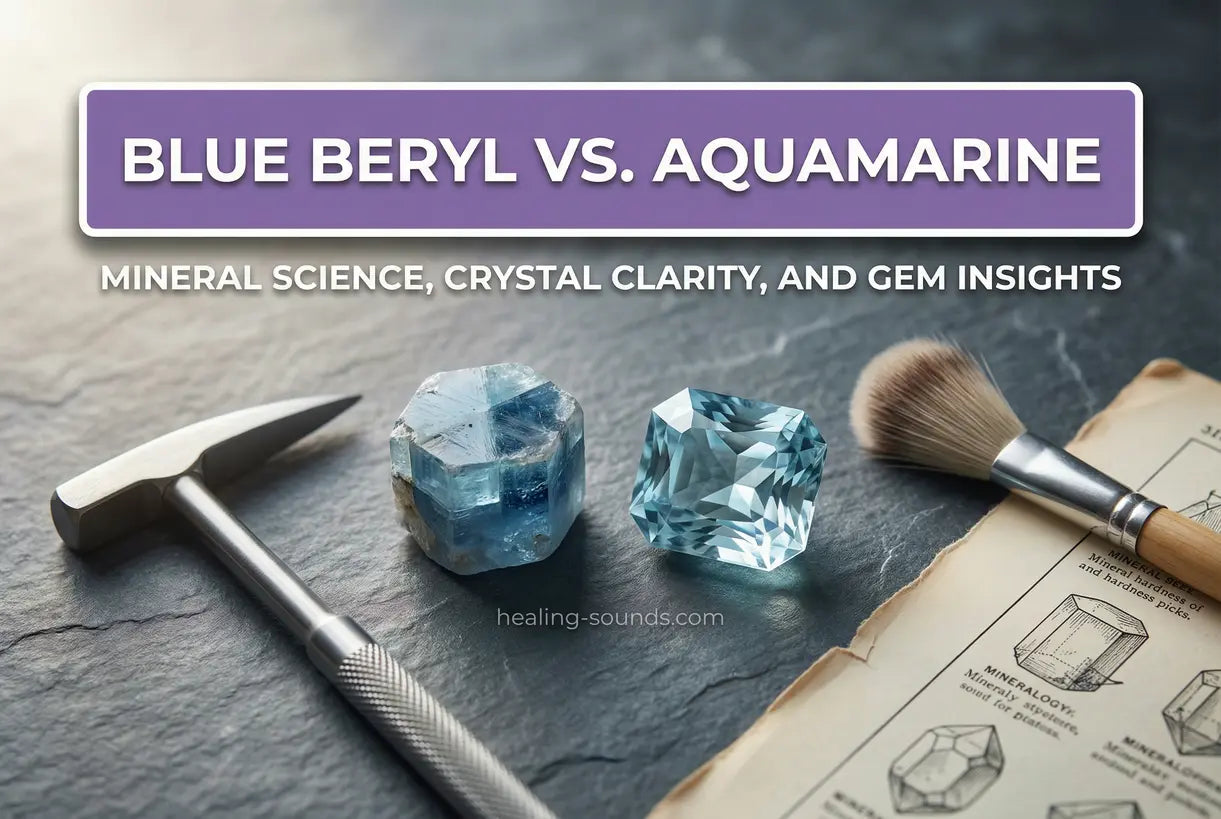
For gemstone enthusiasts and mineral collectors, the distinction between blue beryl and aquamarine can often seem like a matter of semantics. Both belong to the same illustrious mineral family, yet in the world of gemology, specific criteria separate a generic blue specimen from the prized aquamarine. Understanding the mineralogy of aquamarine and its chemical cousins is essential for anyone looking to deepen their appreciation of these geological wonders.
Whether you are evaluating a raw crystal for your collection or seeking a cut stone for jewelry, knowing the science behind the color is key. This guide explores the chemical composition, trace elements, and physical properties that define the blue beryl mineral, distinguishing the stable, oceanic hues of aquamarine from other blue varieties like the rare Maxixe.
The Science of the Beryl Family
To understand the difference, we must first look at the parent mineral. Beryl is a beryllium aluminium cyclosilicate with the chemical formula Be3Al2(SiO3)6. In its pure form, beryl is colorless (known as Goshenite). It is the presence of trace elements—impurities within the crystal lattice—that gifts beryl its famous rainbow of colors, including emerald green, morganite pink, and, of course, the blue of aquamarine.
In the context of mineralogy, aquamarine beryl is the greenish-blue to blue variety of the mineral species. The color is primarily caused by trace amounts of iron (Fe) within the crystal structure. However, the term "blue beryl" is sometimes used by gemologists to describe specimens that do not fit the traditional color range or stability of classic aquamarine, such as the Maxixe type.

Aquamarine: The Standard for Blue Beryl
When most people search for blue beryl meaning or stones, they are almost invariably looking for aquamarine. Scientifically, aquamarine is colored by iron ions (specifically Fe2+ and Fe3+). It is typically dichroic, meaning it shows different shades (blue or colorless/yellowish) when viewed from different angles. This natural blue beryl is renowned for its stability; its color does not fade when exposed to sunlight, making it ideal for jewelry.
For collectors using stones for metaphysical purposes, aquamarine is associated with the throat chakra and calming energies. Its mineral structure is hexagonal, often forming in beautiful, long prismatic crystals that are a staple in any serious collection.

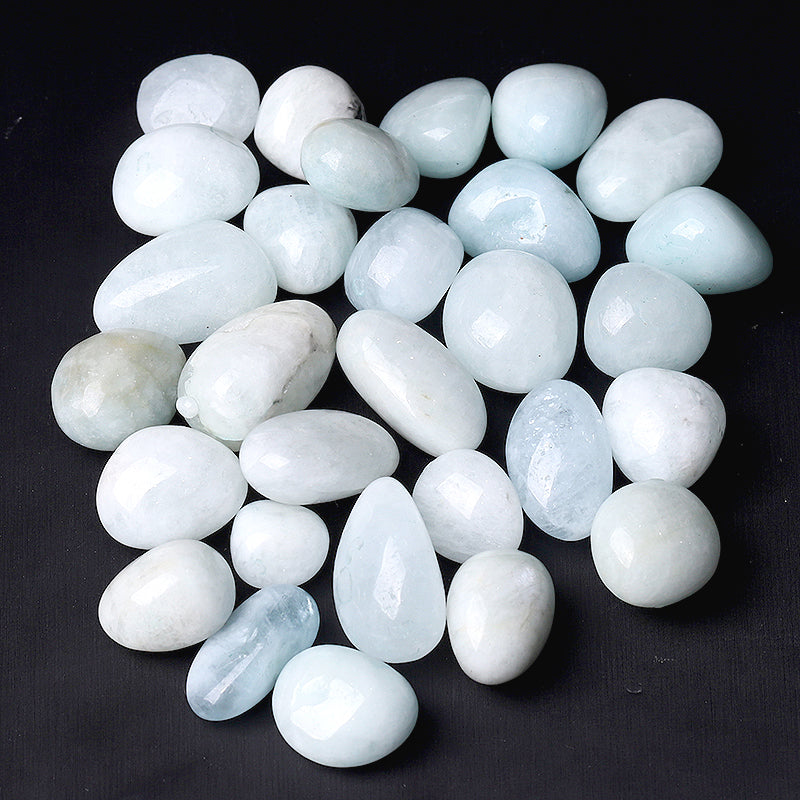
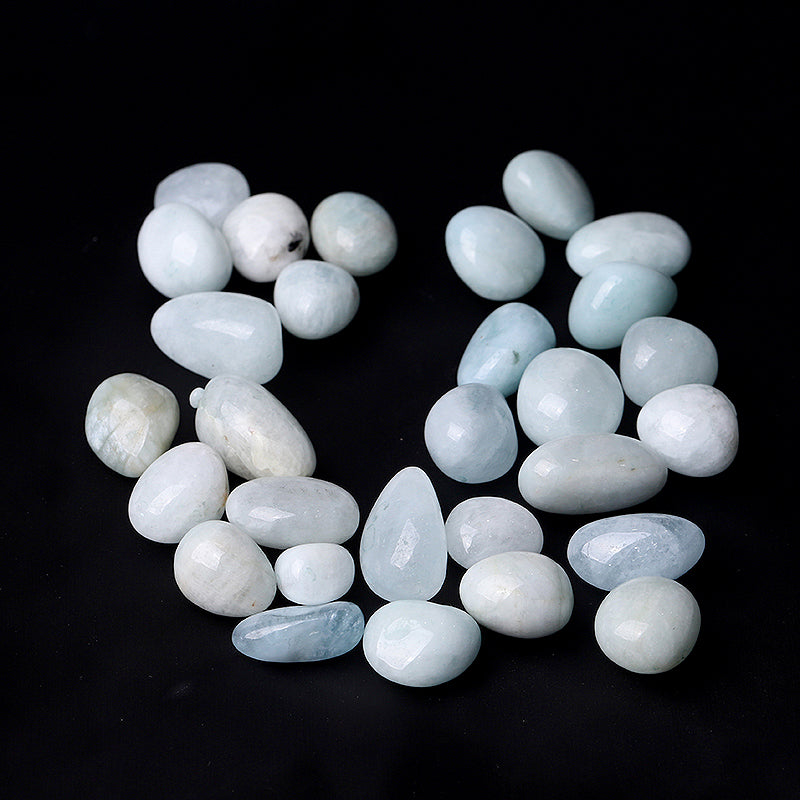
0,25 kg de pierres roulées d'aigue-marine pour l'équilibre de la guérison
$39.90 $59.90
Discover the calming power of aquamarine, the blue beryl variety, perfect for mineralogy study or meditation practice.
Explore ProductThe Maxixe Anomaly: A True "Blue Beryl" Distinction
While aquamarine is technically a blue beryl, there is a specific variety often explicitly referred to as "Blue Beryl" or "Maxixe Beryl" (pronounced mah-she-she) to distinguish it. Discovered in the Maxixe mine in Brazil, this variety boasts a fantastic, deep indigo-blue color that is distinct from the typical sea-blue of aquamarine.
The critical difference lies in the cause of color and stability. Unlike aquamarine, which is colored by iron, the Maxixe blue beryl obtains its color from natural irradiation affecting nitrate impurities or carbonate centers within the crystal channels. Unfortunately, this color center is unstable. When exposed to sunlight or heat, the beautiful deep blue of Maxixe beryl fades rapidly to a yellowish or brownish tone. This fading phenomenon is a key diagnostic tool for separating stable aquamarine blue beryl from the unstable Maxixe variety.
Key Mineralogical Differences
Distinguishing between these varieties often requires more than the naked eye. Gemologists use tools to measure properties like refractive index (RI) and specific gravity (SG). Generally, the Maxixe type beryl has slightly different optical properties compared to standard aquamarine.
- Aquamarine: Colored by Iron (Fe). Stable color. Pleochroism is usually blue and colorless.
- Maxixe (Blue Beryl): Colored by color centers (radiation). Unstable color (fades). Pleochroism is typically strong blue and colorless.
When studying beryl vs aquamarine, inspecting the crystal structure is fascinating. Aquamarine crystals are often free of inclusions, whereas other beryl varieties might be heavily included. The interaction of light with these internal structures is what gives high-quality gems their brilliance.



Value and Rarity in the Market
Generally, fine aquamarine with a saturated blue color is highly valued. However, the rarity of the Maxixe beryl makes it a curiosity for collectors, despite its instability. Buyers should be wary of deep blue beryls sold without certification, as they may be irradiated stones that will fade over time.
Understanding these nuances protects you from overpaying for a stone that might lose its hue. For reputable mineral data, resources like Mindat.org provide extensive crystallographic information that can aid in identification.
Enhance Your Mineral Collection

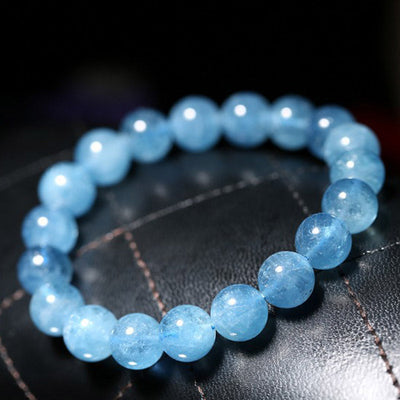
Experience the rare beryl family with this chrysoberyl cat's eye bracelet—ideal for collectors of blue beryl and its relatives. Learn more ➔

Kalimba portable en bois de Peltogyne à 21 touches
$149.90
$209.90
Compliment your blue beryl exploration with tranquil sound healing using this beautifully crafted kalimba instrument. Learn more ➔
Uses and Metaphysical Applications
Beyond the science, what is blue beryl used for? Both aquamarine and other beryl varieties are staples in the world of crystal healing. Aquamarine is famously known as a stone of courage and serenity, used to clear the mind and soothe fears. It is often employed in meditation to activate the Throat Chakra, facilitating clear communication.
Collectors also value these stones for their aesthetic beauty. A raw crystal specimen on a desk not only serves as a visual anchor but also as a reminder of the complex geological processes that occur deep within the Earth.

Conclusion
While the terms are often used interchangeably, the distinction between blue beryl and aquamarine is rooted in mineral stability and chemical nuance. Aquamarine represents the stable, iron-rich variety that has captivated humanity for centuries, whereas other forms like Maxixe offer a rare, albeit fleeting, glimpse into the darker side of the beryl spectrum. Whether you are expanding your scientific knowledge or your crystal collection, understanding these differences ensures you appreciate the true value of these remarkable gems.
Frequently Asked Questions about Blue Beryl
Blue beryl is a variety of the mineral beryl that exhibits a blue color. The most well-known stable blue beryl is Aquamarine, which is colored by iron. There is also a rare, unstable dark blue variety known as Maxixe beryl, which fades in sunlight.
The price depends heavily on the variety and quality. High-quality aquamarine with deep blue saturation is valuable and can be expensive. However, pale blue beryl is generally more affordable. Maxixe beryl is rare but less commercially valuable due to its unstable color.
Red beryl (formerly called Bixbite) is widely considered the rarest beryl color. It is found primarily in the Wah Wah Mountains of Utah and is significantly rarer than diamonds, emeralds, or blue beryl.
Scientifically, Aquamarine is the blue variety of beryl colored by iron. The term "Blue Beryl" is sometimes used to describe the unstable Maxixe variety or very pale specimens. The main difference lies in the specific cause of color and color stability.
Blue beryl, particularly aquamarine, is extensively used in jewelry making due to its hardness and beauty. In metaphysical practices, it is used for balancing the Throat Chakra, promoting calmness, and enhancing clear communication.