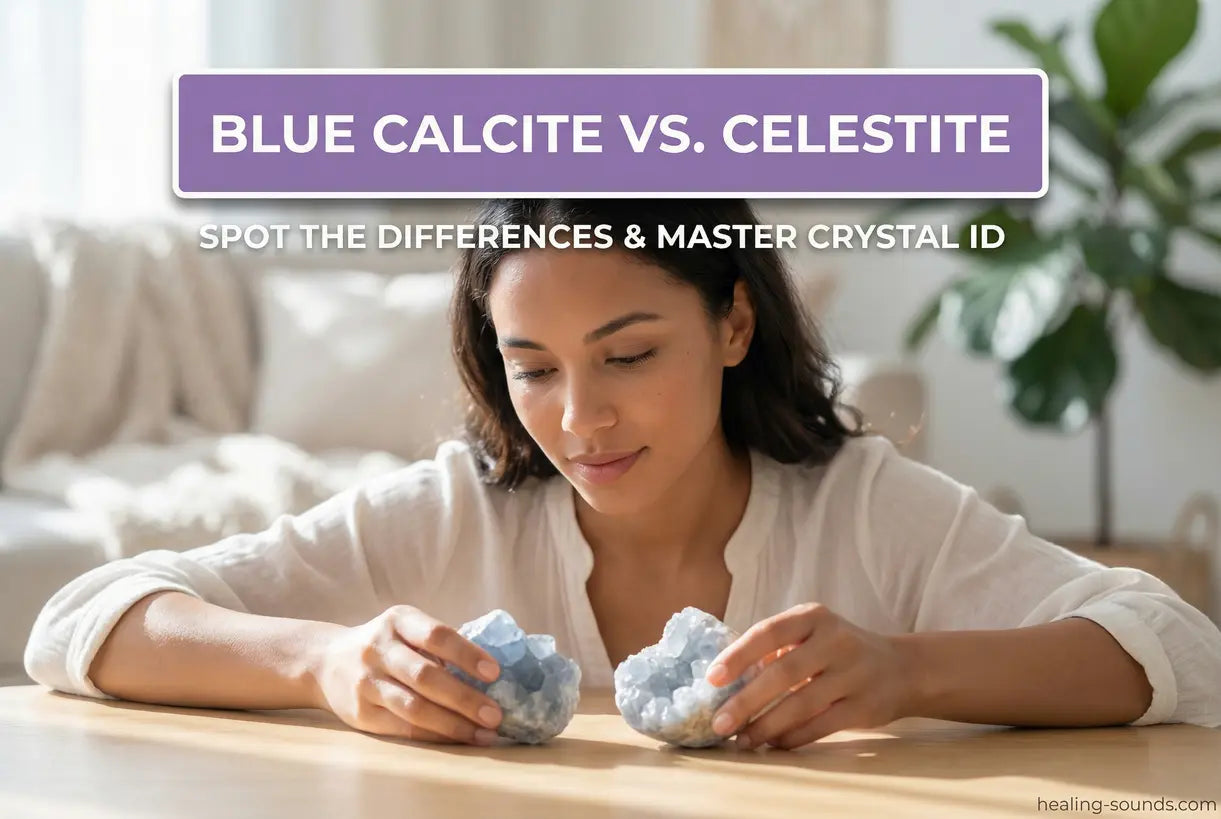
Have you ever picked up a soft blue stone at a gem show, convinced it was one thing, only to be told it was another? You aren't alone. In the world of crystal collecting, distinguishing between blue calcite and celestite is one of the most common challenges for enthusiasts. Both stones share a calming, ethereal blue hue and are beloved for their gentle energy, yet they are distinct minerals with unique physical structures and healing vibrations.
Whether you are a seasoned collector or just starting your journey, understanding the nuances between blue calcite vs blue celestite is essential for ensuring you have the right tool for your energetic work. While they may look like twins at a glance, a closer inspection reveals difference in weight, crystal formation, and even how cold they feel to the touch. This guide will walk you through the key physical identifiers and the specific blue calcite and celestite healing properties to help you confidently tell them apart.
The Visual and Physical Differences
The primary confusion stems from their color. Both manifest in shades ranging from pale, milky baby blue to deeper, grey-blue tones. However, once you move past the color, the properties of blue calcite and celestite diverge significantly.
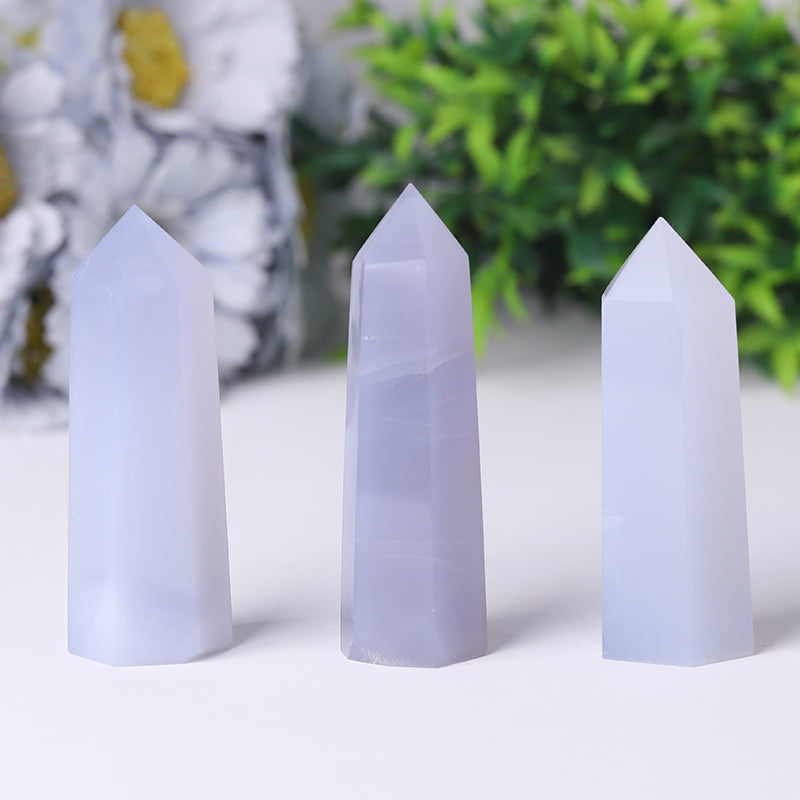
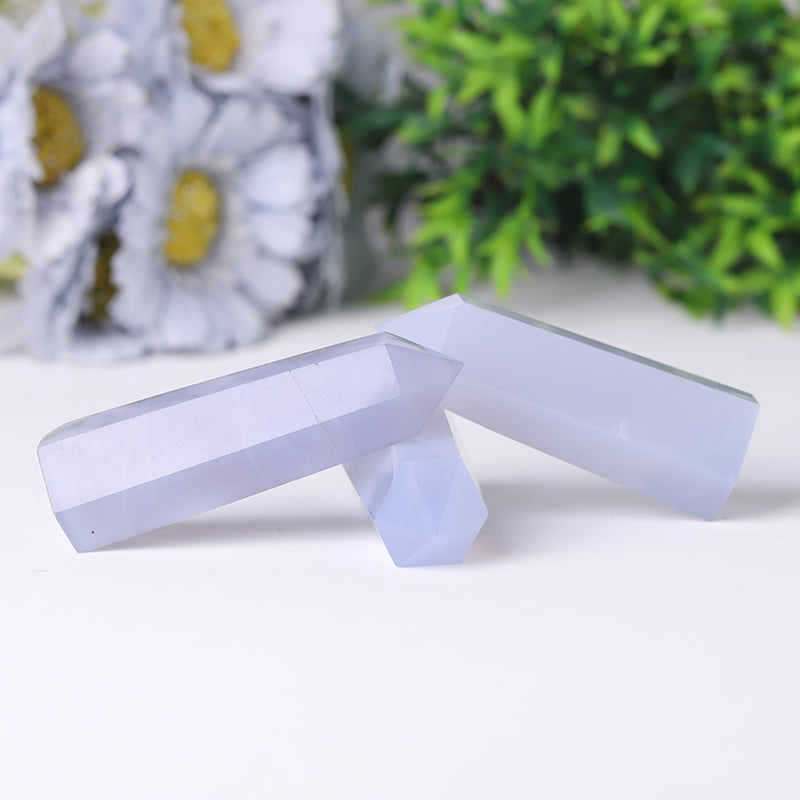
- Blue Calcite: Typically opaque with a "waxy" or "soapy" texture. It often appears in massive forms rather than distinct crystal points.
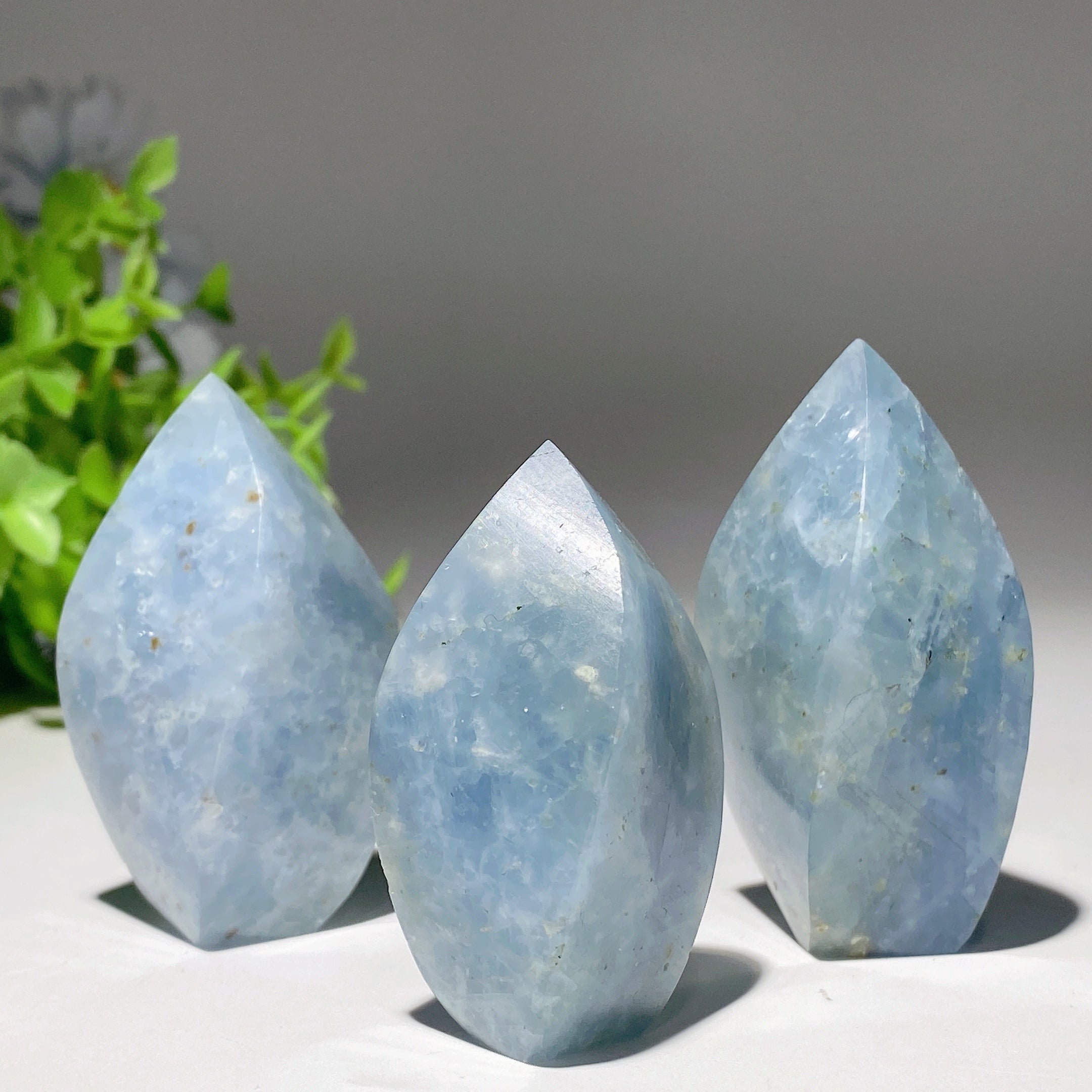
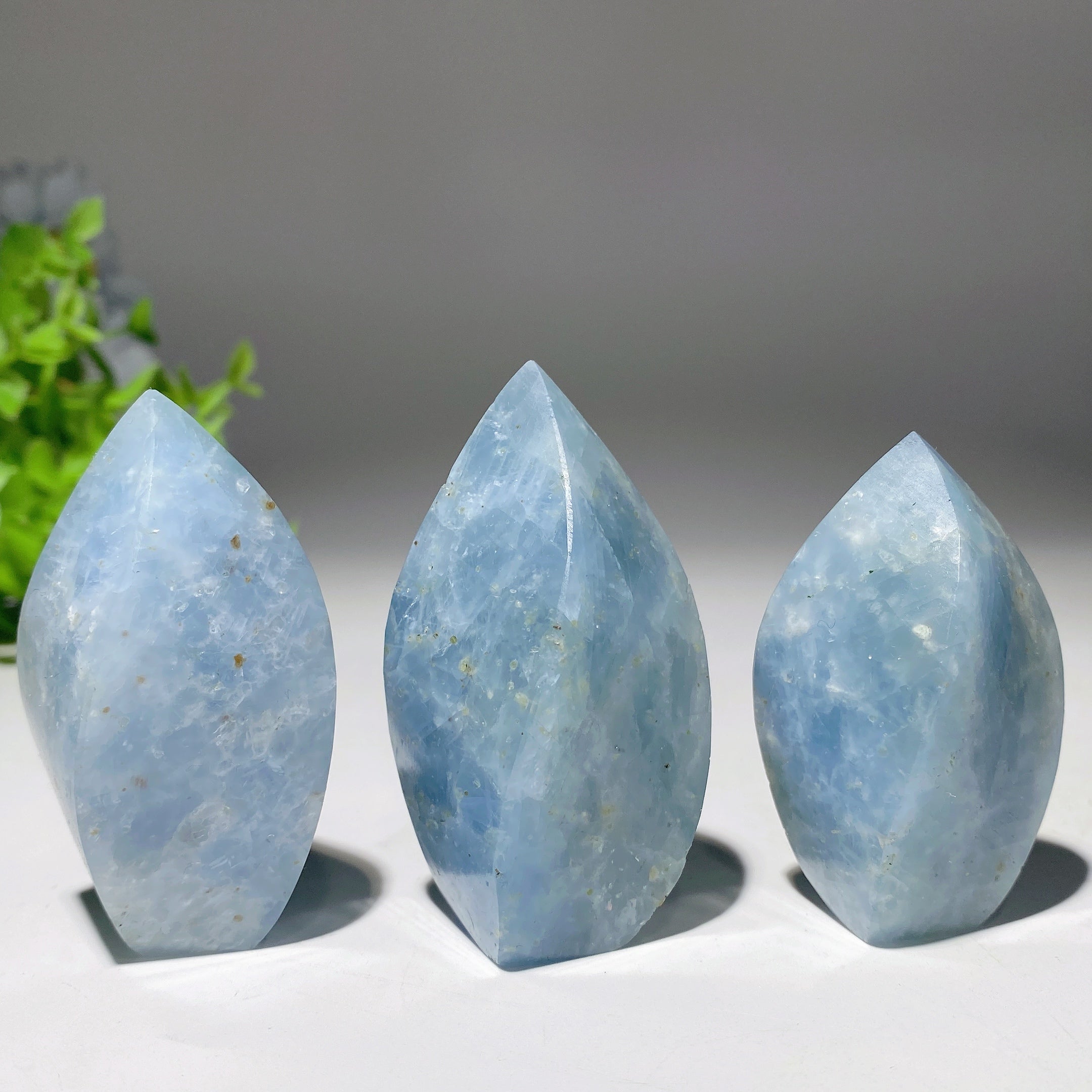
- Celestite: Usually transparent to translucent with a "glassy" or vitreous luster. It forms distinguishable orthorhombic crystals.
1. Texture and Luster
One of the quickest ways to differentiate blue calcite and celestite is by examining the surface. Blue Calcite has a softness to it; it often feels smooth, almost like a bar of soap, and has a waxy sheen. In contrast, Celestite (often called Celestine) tends to sparkle more. It has a vitreous luster that looks like glass, and raw pieces will often show well-defined, angular crystal clusters that catch the light beautifully.

2. Weight and Density
If you have the opportunity to hold them, the "heft test" is incredibly revealing. Celestite is a strontium sulfate mineral, making it significantly denser and heavier than Calcite, which is a calcium carbonate. If you hold a piece of blue calcite and celestite of roughly the same size, the Celestite will feel surprisingly heavy for its size, while the Calcite will feel lighter and more standard.
3. Hardness and Fragility
Both minerals are relatively soft on the Mohs scale, but they require different handling. Blue Calcite sits at a 3, meaning it can be scratched by a copper coin. Celestite is slightly harder at 3-3.5 but is extremely brittle. Celestite clusters are notorious for flaking or breaking if handled roughly, whereas massive blue calcite is generally sturdier, though still soft compared to quartz.

Tour de cristal de calcite bleue de 2,5 à 4,5 pouces, affichage de guérison
$30.90 $39.90
Showcase or identify Blue Calcite with this luminous tower—perfect for hands-on comparison and energetic clarity at home.
Explore ProductEnergetic and Healing Properties
Beyond their physical identification, the blue calcite and celestite healing properties offer different energetic experiences. While both work with the upper chakras to promote peace, their "vibrational personality" differs.
Blue Calcite: The Soother
Blue Calcite is deeply connected to the Throat Chakra. Its energy is gentle, wrapping the user in a blanket of tranquility. It is an excellent stone for communication, helping to clear energetic blockages that prevent you from speaking your truth. Physically, it is often used to soothe frayed nerves and reduce anxiety. It acts as an energy amplifier and cleanser, making it perfect for distance healing or simply clearing the vibe of a room after a stressful day.
Celestite: The Uplifter
Celestite vibrates at a higher frequency and is primarily associated with the Third Eye and Crown Chakras. As its name suggests, it connects to the celestial realm. This crystal is renowned for inviting angelic guidance and promoting deep, spiritual peace. It is less about "soothing" in a physical sense and more about elevating your consciousness. It is a powerful tool for dream recall, astral travel, and meditation.
For a visual guide on these differences, watch this helpful identification video:
Side-by-Side Comparison Guide
To help you visualize the blue calcite vs blue celestite distinction, here is a quick reference guide. Recognizing these traits can save you from purchasing a mislabeled specimen.
| Feature | Blue Calcite | Blue Celestite |
|---|---|---|
| Composition | Calcium Carbonate (CaCO3) | Strontium Sulfate (SrSO4) |
| Crystal System | Trigonal (often massive) | Orthorhombic (tabular/pyramidal) |
| Luster | Waxy, resinous, dull | Vitreous, pearly, glassy |
| Weight | Average/Light | Heavy/Dense |
| Chakra | Throat Chakra | Crown & Third Eye Chakras |
Visual aids are often the best way to learn. The infographic below summarizes the key visual cues you should look for when shopping.

How to Use and Pair Them
Because they share a color palette and calming nature, blue calcite and celestite pair wonderfully together. Placing them in the same space creates a synergy of grounded communication (Calcite) and high-vibration spiritual connection (Celestite). This combination is particularly effective in bedrooms to promote restful sleep or in creative spaces where you need both inspiration and the ability to articulate your ideas.
When incorporating Celestite into your collection, consider forms that highlight its unique crystal structure, such as geodes or free forms, which differ vastly from the typically polished or raw chunks of Calcite.
Discover Rare Celestite Specimens

Experience genuine Celestite in this unique flame form—ideal for distinguishing crystal structure and subtle color differences. Learn more ➔

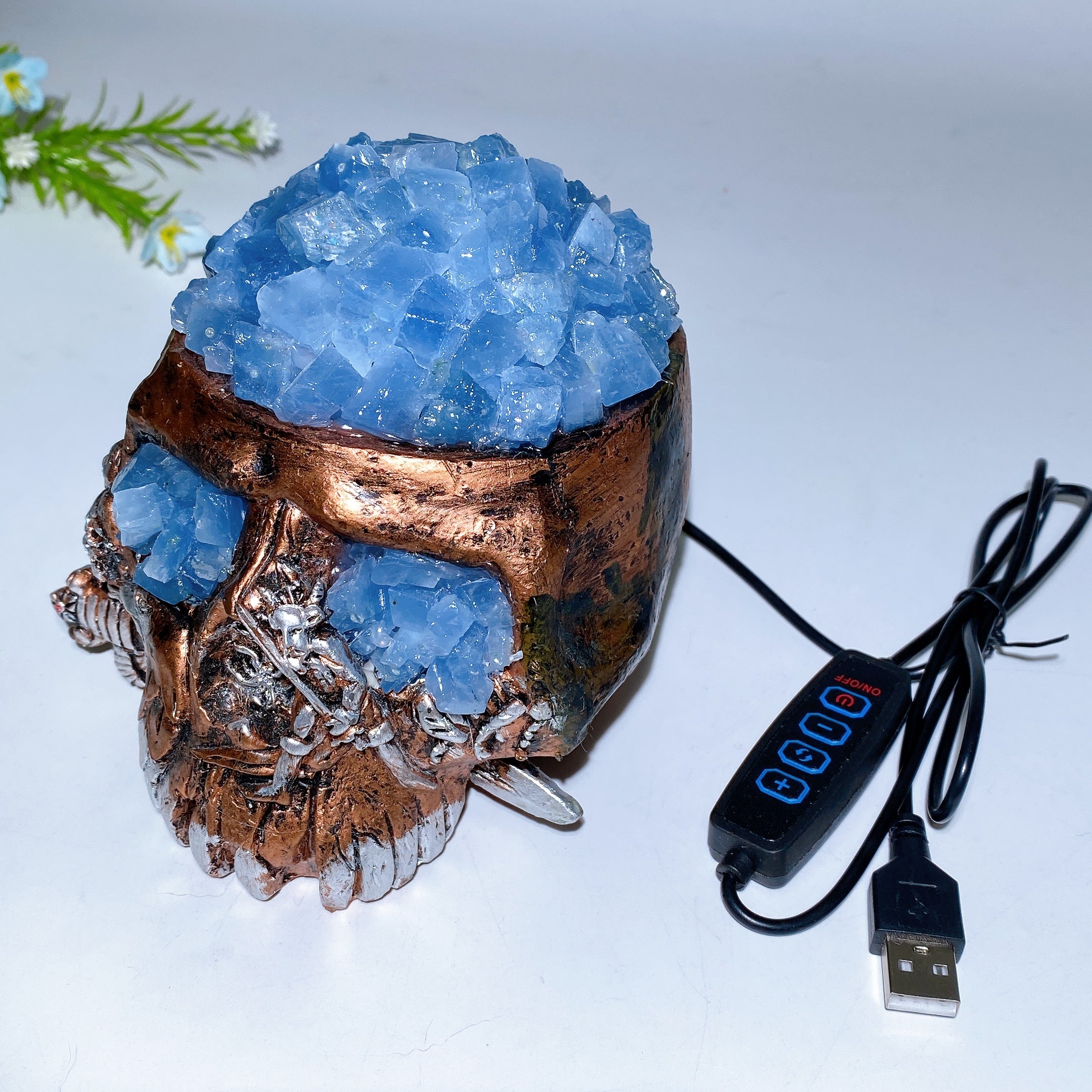
Add mystical blue to your collection and see celestite’s glow in action—explore its visual & energetic contrast to blue calcite. Learn more ➔
Care and Maintenance
Both stones are sensitive and require gentle care. Because Blue Calcite is a carbonate and Celestite is a sulfate, they are both relatively soft. Crucially, Celestite is water-soluble over time and can degrade or lose its luster if soaked. Blue Calcite is also sensitive to acids (like vinegar) and prolonged water exposure.
For cleansing, avoid water baths. Instead, use smoke cleansing (sage or palo santo), sound healing with tuning forks, or place them on a selenite charging plate. Keep Celestite out of direct sunlight, as its beautiful blue color is prone to fading under UV exposure.

Conclusion
Distinguishing between blue calcite and celestite enriches your appreciation for the mineral kingdom. While Calcite offers a soothing, waxy touch perfect for emotional release, Celestite provides a heavy, crystalline anchor for spiritual ascension. By paying attention to weight, luster, and crystal shape, you can confidently identify these blue beauties and harness their unique energies for your well-being. Whether you choose the communication-enhancing powers of calcite or the angelic vibrations of celestite, both are stunning additions to any collection.
Frequently Asked Questions about Blue Calcite and Celestite
No, they are distinct minerals. Blue Calcite is a calcium carbonate with a waxy luster and lower density, while Celestite is a strontium sulfate that is heavier, often more transparent, and forms more distinct orthorhombic crystals.
Blue Calcite pairs excellently with other throat chakra stones like Aquamarine and Sodalite for communication. For anxiety relief, it works well with Lepidolite or Amethyst.
Celestite pairs powerfully with high-vibration stones like Angelite, Selenite, and Clear Quartz to amplify spiritual connection. It also complements Blue Calcite for a comprehensive calming effect.
Blue Celestite is renowned for promoting deep peace, aiding in sleep and dream recall, and facilitating communication with higher spiritual realms or angelic guides. It helps clear the mind of worry.
The most reliable indicators are weight and luster. Celestite is noticeably heavier for its size and has a glassy sparkle, whereas Blue Calcite feels lighter and has a waxy, soap-like sheen.