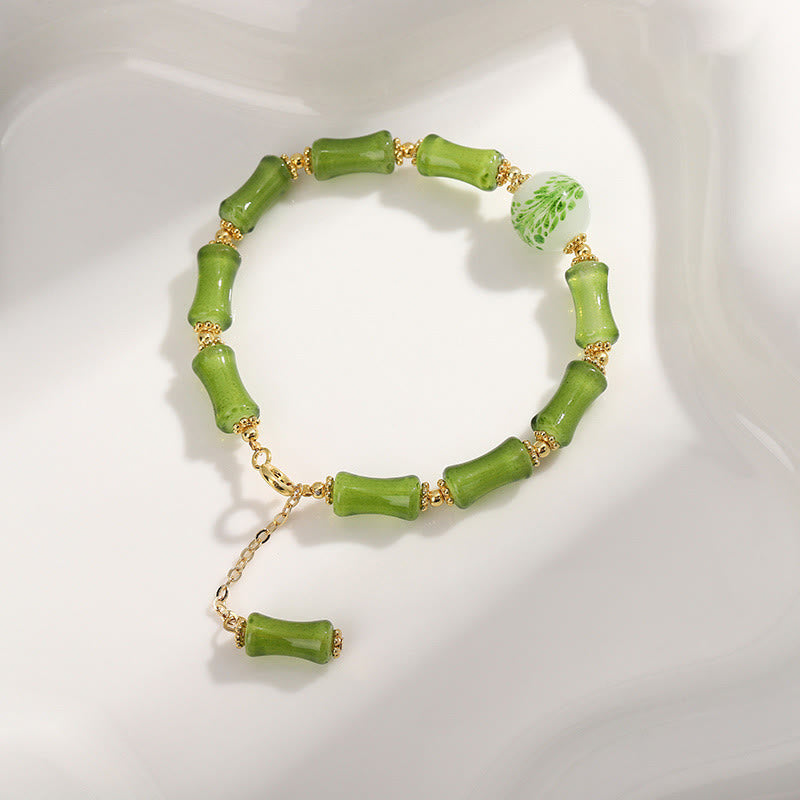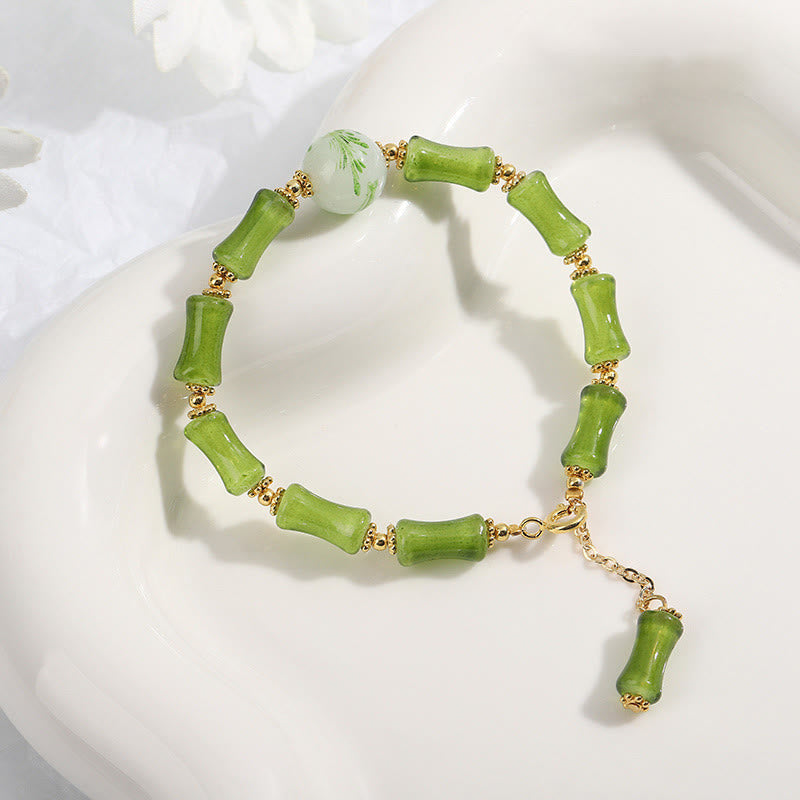
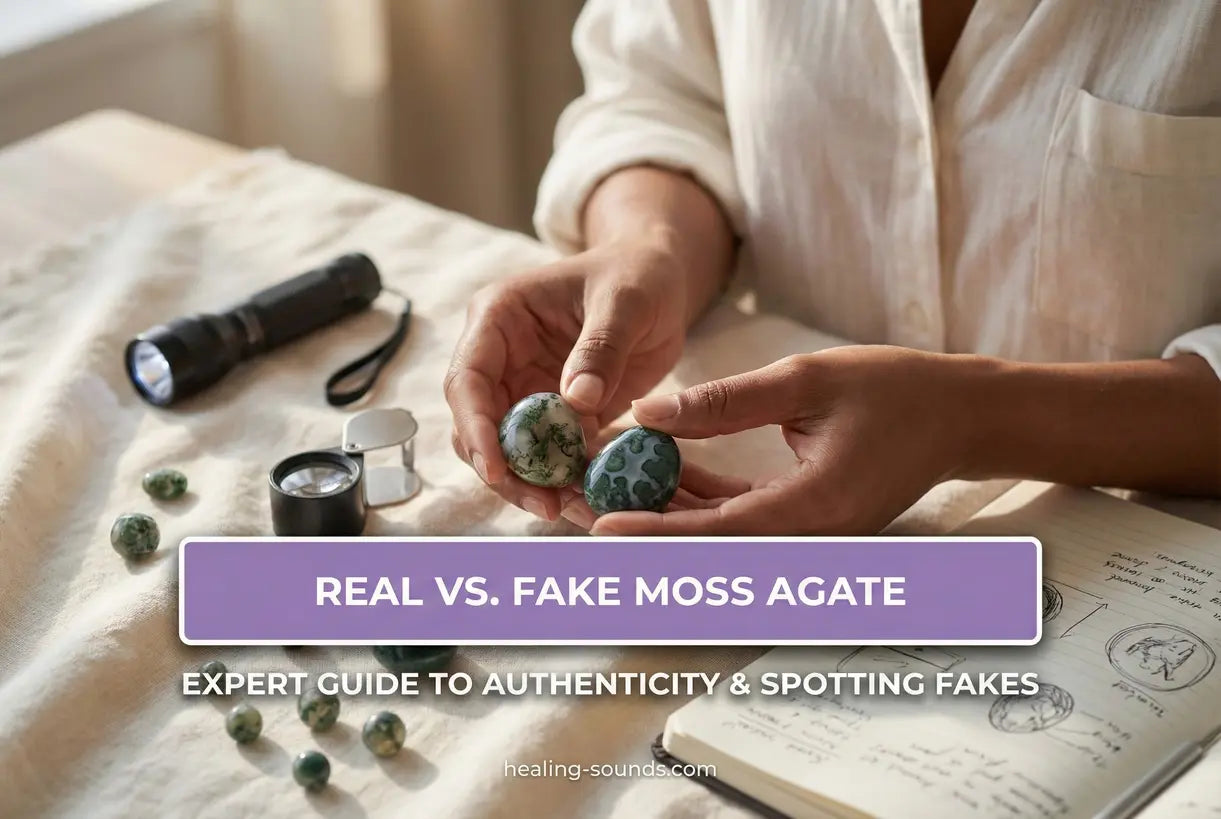
For crystal enthusiasts and wellness seekers, few stones are as captivating as Moss Agate. Known for its lush, green, moss-like inclusions that seem to float within a milky or clear stone, it is a favorite for grounding and connecting with nature. However, as its popularity has grown, so has the prevalence of fake moss agate in the market. There is nothing more disheartening than purchasing what you believe to be a powerful healing crystal, only to discover it is merely dyed glass or plastic.
Distinguishing between real moss agate and synthetic imitations requires a keen eye and a bit of knowledge. Whether you are buying jewelry for spiritual healing or adding to a mineral collection, knowing how to identify real moss agate is essential to ensure you receive the stone's genuine energetic benefits. This guide will walk you through the visual signs, physical tests, and expert tips needed to spot fake moss agate with confidence.
Understanding the Nature of Real Moss Agate
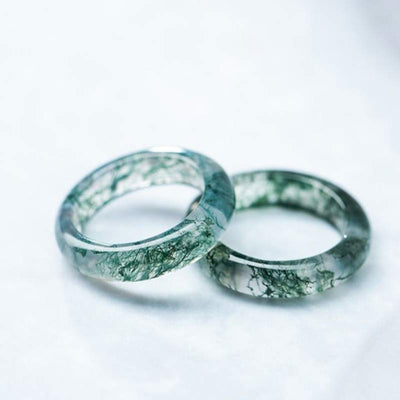
To spot a fake, you must first understand what the genuine article looks like. Moss Agate is technically a form of chalcedony which contains minerals of a green color embedded in the stone, forming filaments and other patterns suggestive of moss. These inclusions are typically oxides of manganese or iron.
Real moss agate is chaotic and natural. The "moss" inside never looks perfectly uniform. You will often see variations in transparency, ranging from clear to milky white quartz, with the green inclusions suspended three-dimensionally within the stone. Because it is a product of nature, no two stones are exactly alike.
When examining a stone, look closely at the depth of the inclusions. In genuine specimens, the green tendrils appear to be deep inside the stone, not just painted on the surface. This depth is a hallmark of moss agate authenticity.

Visual Signs of Fake Moss Agate
The most common forms of fake moss agate are usually made from glass, plastic, or dyed agate of lesser quality. Here are the primary visual indicators that should raise a red flag:
- Air Bubbles: If you see tiny round bubbles inside the stone, it is likely glass. Natural quartz or chalcedony does not contain round air bubbles.
- Unnatural Colors: While moss agate can have shades of red or brown, neon greens or overly bright, uniform colors often indicate dyeing.
- Pattern Uniformity: If a strand of beads looks identical from one bead to the next, it is likely manufactured. Nature rarely repeats itself perfectly.
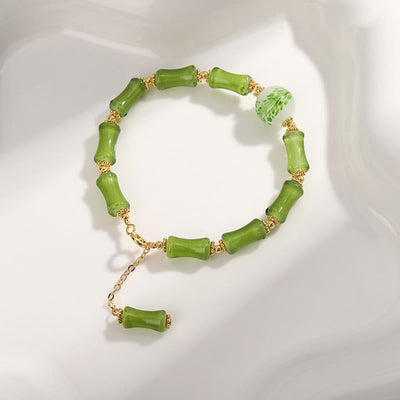
Sometimes, sellers use "Dragon Vein Agate" (which is often dyed and heat-treated) and mislabel it. While it is still agate, it is not natural moss agate. True moss agate genuine vs fake comparisons often reveal that fakes lack the organic, vegetative look of the real stone.

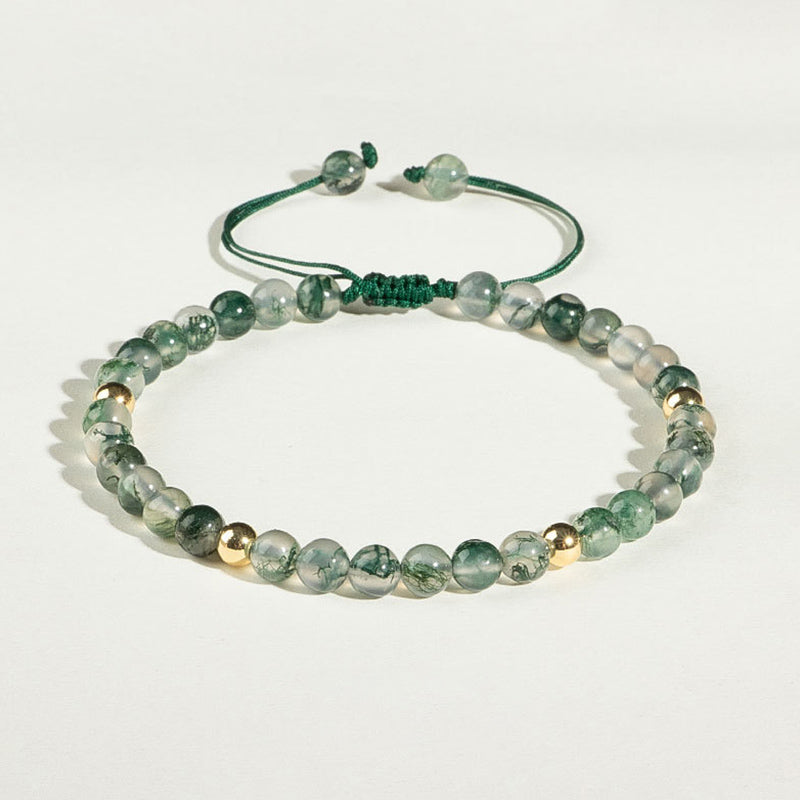
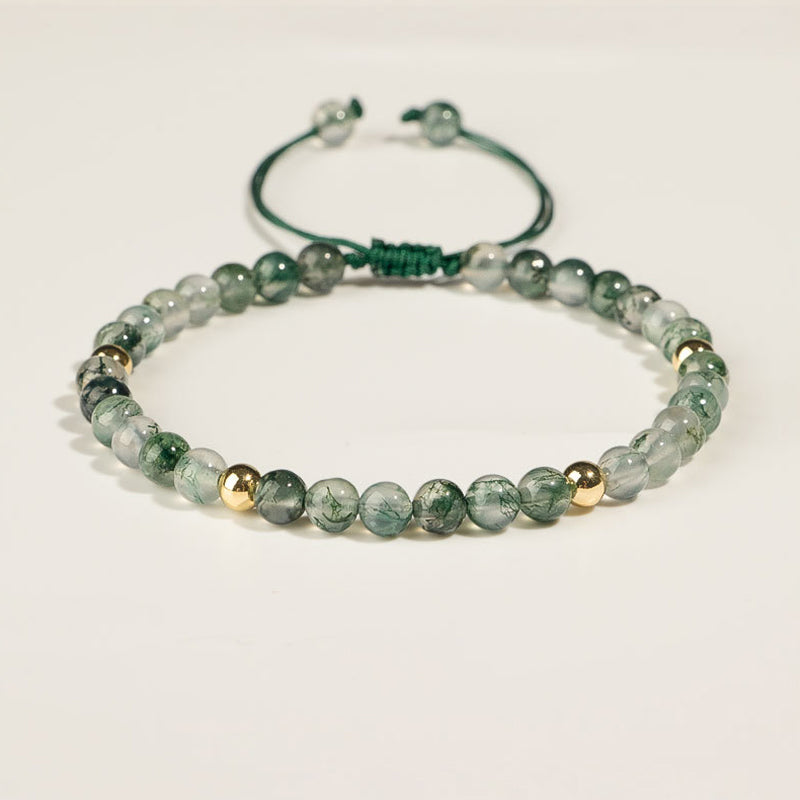
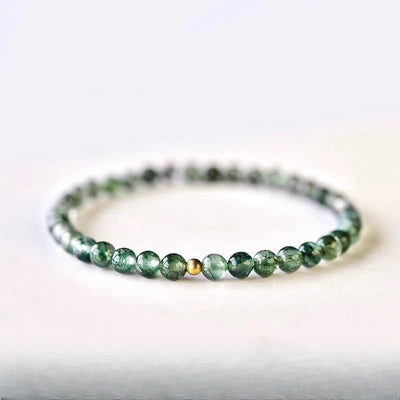
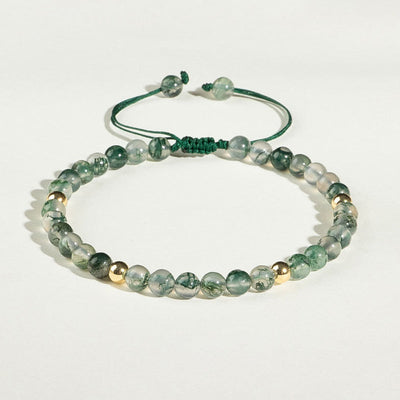
Bracelet de méditation Lucky Balance en agate mousse de 4 mm
$24.90 $35.90
Wear genuine moss agate daily—this bracelet showcases authentic patterns, great for learning to spot real vs. fake moss agate.
Explore ProductPhysical Tests for Authenticity
Beyond visual inspection, there are simple physical moss agate tests you can perform at home to verify your stone. These rely on the physical properties of silica-based minerals compared to plastic or glass.
The Temperature Test
Real crystals are excellent heat conductors. When you first pick up a piece of real moss agate, it should feel cool to the touch, even in a warm room. It will eventually warm up in your hand, but that initial coolness is distinct. Plastic imitations will feel room temperature or warm immediately. Glass can feel cool, but it usually warms up faster than natural stone.
The Hardness Test
Moss Agate has a hardness of about 6.5 to 7 on the Mohs scale. This means it is relatively hard and durable. It should not be easily scratched by a steel knife or a copper coin. If your stone scratches very easily, it might be plastic or a softer imitation stone. Conversely, fake moss agate signs often include surface scratches from wear and tear that genuine agate would resist.
Weight and Density
Natural stone is denser than plastic. If you hold a bead that feels surprisingly light for its size, proceed with caution. Genuine agate has a satisfying heft to it. While glass can be heavy, combining the weight test with the temperature test helps narrow down the possibilities.

Comparing Authenticity: A Quick Checklist
To help you summarize how to spot fake moss agate, refer to this comparison of features found in natural stones versus their synthetic counterparts.
| Feature | Real Moss Agate | Fake / Synthetic |
|---|---|---|
| Inclusions | 3D, moss-like, irregular depth | Painted on surface or uniform swirls |
| Bubbles | None | Often present (if glass) |
| Temperature | Cold to the touch initially | Room temperature (plastic) |
| Pattern | Random, chaotic, organic | Symmetrical, repetitive |
For more detailed scientific data on the properties of chalcedony and agate, you can reference the Mindat.org database, a reputable source for mineralogical information.
Buying Tips: How to Ensure You Get the Real Deal
The best defense against scams is purchasing from reputable sources who understand gemology. When looking at product photos, check for high-resolution images that allow you to zoom in on the texture. If a seller uses a stock image that looks overly perfect or identical for multiple listings, be wary.
Additionally, price can be an indicator. While moss agate is not as expensive as diamonds or sapphires, it is not dirt cheap either. Extremely low prices for "perfect" looking stones are often indicative of mass-produced glass. Trust your intuition—if it looks too good to be true, it likely is.
Investing in authentic jewelry allows you to connect with the true grounding energy of the earth. Whether you are using a mala for meditation or a bracelet for daily wear, the presence of genuine minerals makes all the difference.
Authentic Moss Agate Collections

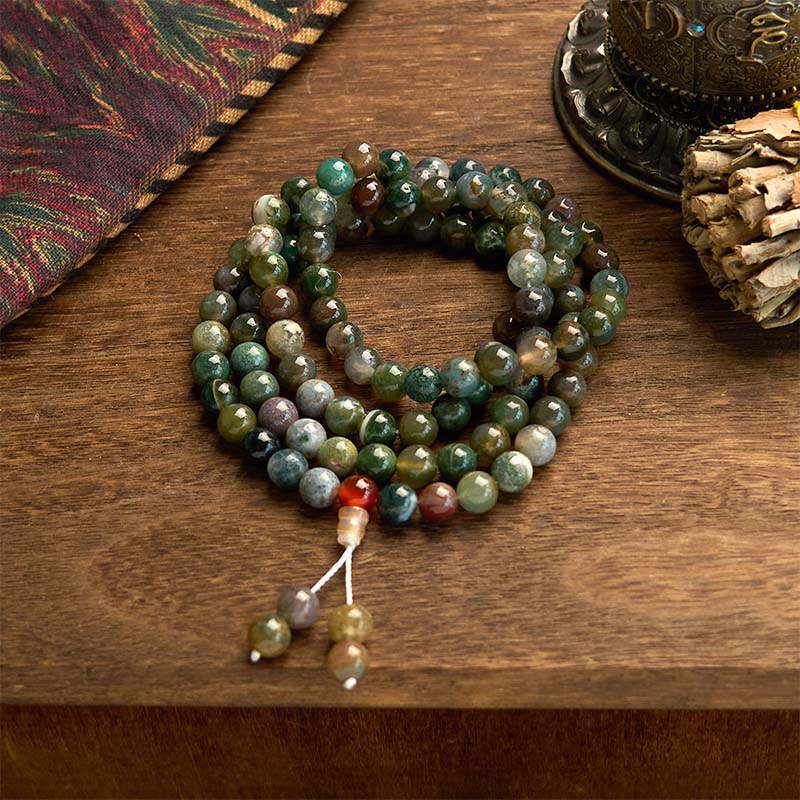
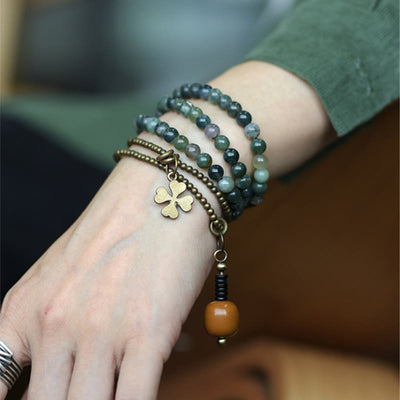
Inspect natural moss agate in a classic mala; see real moss inclusions for hands-on identification of authentic stones. Learn more ➔

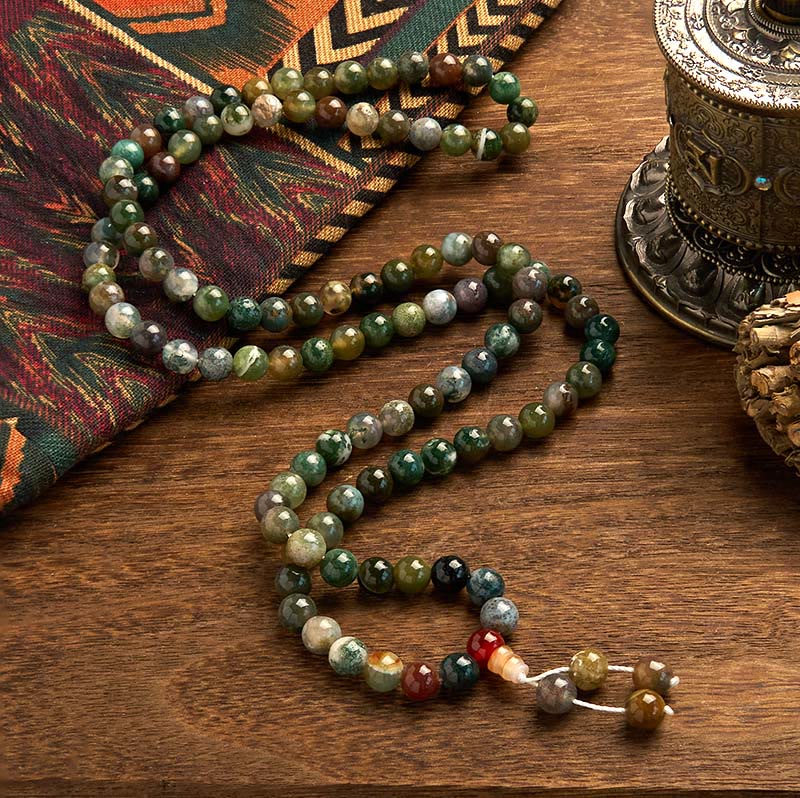
Study beautiful moss agate beads in this piece—perfect for comparing genuine inclusions and clarity when verifying authenticity. Learn more ➔

Conclusion
Learning how to spot fake moss agate empowers you to make conscious choices and build a crystal collection that is both beautiful and energetically potent. By checking for natural imperfections, testing the stone's temperature, and observing the depth of the inclusions, you can avoid common scams. Remember that real moss agate is a unique work of art from the earth, carrying patterns that can never be perfectly replicated by a machine. Always prioritize transparency and quality when selecting your healing stones.
Frequently Asked Questions about Moss Agate Authenticity
You can tell if moss agate is real by looking for irregular, chaotic green inclusions that appear to be floating deep within the stone. Real moss agate feels cool to the touch and does not contain round air bubbles.
Common signs of fake moss agate include perfectly uniform patterns, visible round air bubbles (indicating glass), feeling warm to the touch (indicating plastic), or unnatural neon colors from dyes.
Yes, effective tests include the temperature test (real stone feels cold), the hardness test (it should not be scratched by a steel knife), and the weight test (real stone is denser and heavier than plastic).
Natural moss agate typically appears as a clear or milky white stone containing green, branch-like mineral inclusions (resembling moss) that are randomly distributed. It may also have brown or red spots.
Yes, moss agate can be imitated using glass, plastic, or resin. Manufacturers may also use other types of plain agate or chalcedony and dye them to mimic the mossy appearance, though these often look artificial.