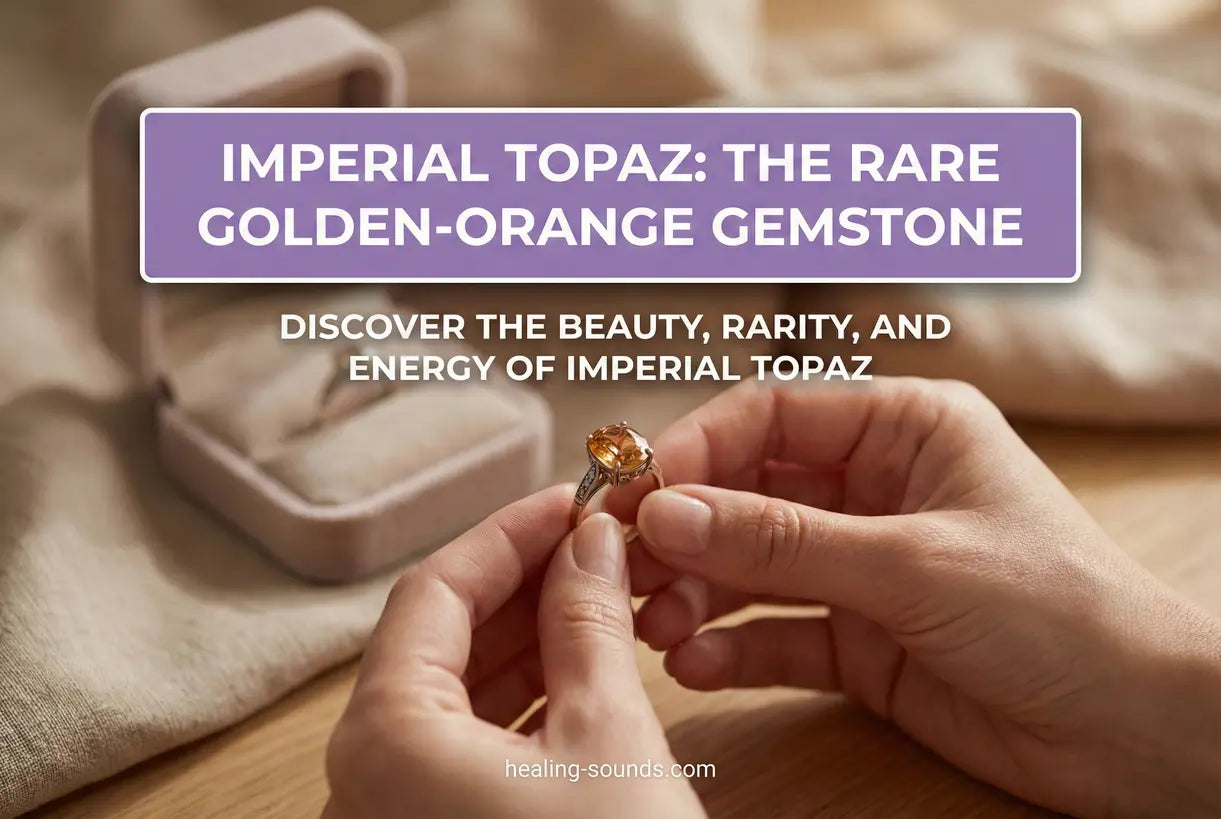
For gemstone enthusiasts and spiritual seekers alike, few stones command the respect and awe of imperial topaz. Distinguished by its breathtaking distinctive hues, this rare golden-orange gemstone is often considered the "emperor" of the topaz family. Unlike the common irradiated blue topaz found in commercial jewelry, authentic imperial topaz is a natural wonder, celebrated for its scarcity and its vibrant, sunset-like color palette.
Whether you are a collector looking for an investment-grade gem or a spiritual practitioner seeking to harness the energy of the solar plexus chakra, understanding the unique qualities of this stone is essential. In this guide, we will explore the history, value, and metaphysical power of natural imperial topaz, and how it stands apart from other stones like precious topaz and citrine.
What Defines Imperial Topaz?
Imperial topaz is the most sought-after variety of the mineral topaz. Its name is steeped in history; legend suggests it was named in honor of the Russian Tsars of the 17th century, who claimed exclusive rights to the pink and reddish-orange gemstones mined in the Ural Mountains. Today, while the Russian mines are largely depleted, the legacy of this rare gemstone lives on.
Currently, the Ouro Preto region in Minas Gerais, Brazil, is the world's primary source for quality imperial topaz. What sets this variety apart is its natural color stability. Unlike many other gems that require heat treatment to achieve their look, the finest imperial topaz emerges from the earth with its brilliant golden-orange, reddish-brown, or peach-pink tones fully intact.

The Color Spectrum: Identifying the Real Gem
The value of imperial topaz is heavily dependent on its color. While standard "precious topaz" is often yellow or golden, true "Imperial" status is usually reserved for stones with a distinct reddish or pinkish overtone—often described as the color of a setting sun or fine sherry.
- Golden-Orange: The classic and most recognizable hue.
- Pink and Red: The rarest and most valuable shades. Natural pink topaz is exceptionally scarce.
- Peach and Salmon: Highly desirable for their soft, warm glow.
One of the fascinating optical properties of this stone is pleochroism, where the gem shows different colors when viewed from different angles. This adds a depth of fire to topaz jewelry that is hard to replicate in synthetic or lesser stones.
Metaphysical Properties and Healing Energy
In the realm of crystal healing, imperial topaz healing properties are revered for their connection to the Solar Plexus and Sacral Chakras. It is known as a stone of good fortune and divine will. Users often turn to this gem to recharge their spiritual "batteries," overcoming exhaustion and finding the drive to manifest their desires.
The energy of imperial topaz is warm, sunny, and abundant. It is said to act as a catalytic trigger, activating the wearer's personal power and creativity. While genuine imperial topaz can be a significant investment, many practitioners also work with other high-vibration golden stones, such as Citrine, to access similar frequencies of abundance and mental clarity.

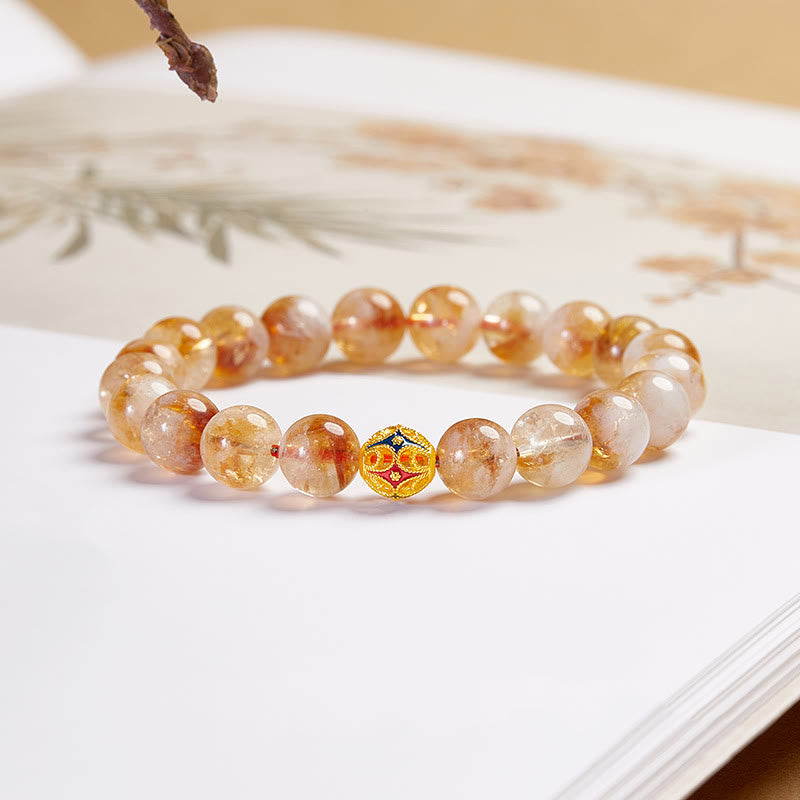
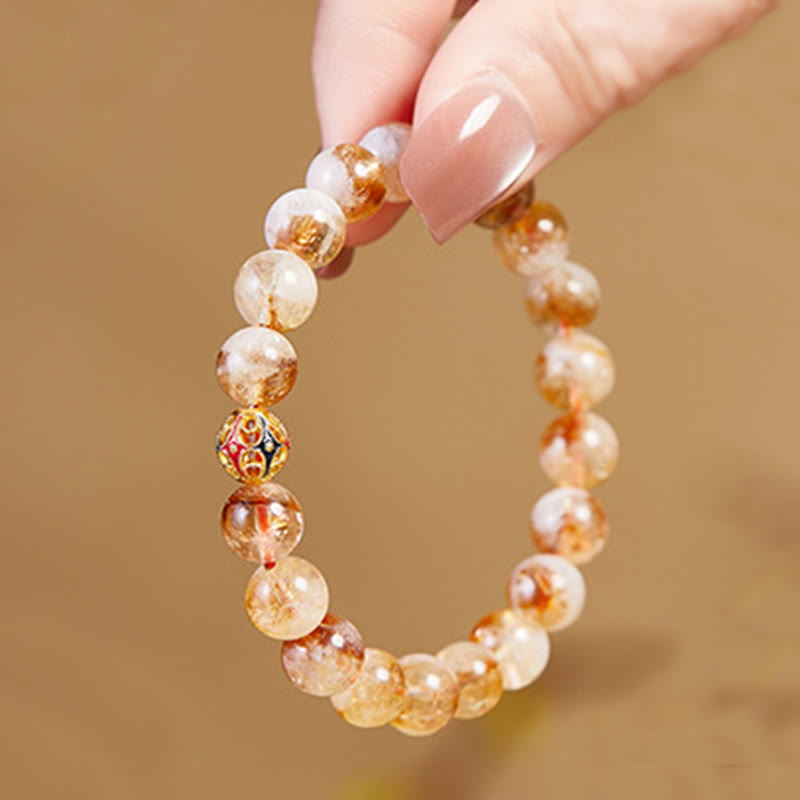
Bracelet Mala 108 perles en citrine et agate rouge pour la méditation
$199.90 $289.90
Experience golden gemstone energy with this mala bracelet, ideal for abundance and clarity during meditation.
Explore ProductImperial Topaz vs. Precious Topaz and Citrine
Confusion often arises when distinguishing between imperial topaz, precious topaz, and similar-looking stones like citrine. Understanding these differences is crucial for determining imperial topaz value.
Precious Topaz vs. Imperial Topaz
The term "precious topaz" was historically used to distinguish natural topaz from "gold topaz" (which was actually heat-treated amethyst or citrine). However, in modern trade, "precious topaz" typically refers to yellow or golden gems that lack the reddish/pinkish pleochroism of the "imperial" variety. Imperial topaz is significantly rarer and commands a much higher price per carat.
Imperial Topaz vs. Citrine
Visually, deep orange citrine (Madeira Citrine) can resemble imperial topaz. However, they are chemically distinct. Topaz is a silicate mineral with a hardness of 8, while citrine is a variety of quartz with a hardness of 7. While imperial topaz is a collector's rarity, citrine is an abundant and accessible alternative for those seeking that beautiful golden glow in their jewelry.

Value and Investment Potential
Is imperial topaz valuable? Absolutely. High-quality natural specimens, especially those over 2 carats with deep pink or red hues, are exceedingly rare. As mines in Brazil produce less material, the value of these stones continues to rise, making them excellent candidates for investment portfolios.
When evaluating a stone, look for clarity and saturation. Inclusions are common in natural topaz, but eye-clean stones are preferred. Because of its scarcity, finding authentic imperial topaz often requires visiting specialized gem dealers or high-end jewelers. For daily wear or meditation focused on the golden ray, many turn to high-quality alternatives that capture the same aesthetic warmth.
Golden Energy Alternatives

Wear the brilliance of golden citrine for prosperity and energy—perfect for lovers of rare and powerful gems. Learn more ➔

Embrace natural golden energy with this citrine bracelet, a radiant complement for those drawn to imperial topaz. Learn more ➔
Care and Wearing Your Gemstone
If you are lucky enough to own topaz jewelry featuring an imperial stone, proper care is vital. While it is a hard stone, extreme temperature changes or ultrasonic cleaners can cause damage due to its liquid inclusions or cleavage planes. Clean your topaz with warm, soapy water and a soft cloth.
For more detailed gemological data, you can consult resources like the Gemological Institute of America (GIA), which provides extensive reports on topaz varieties and treatments.

Conclusion
Imperial topaz remains one of the natural world's most spectacular treasures. Its fiery brilliance and golden-orange depths capture the essence of the sun itself. Whether you are drawn to it for its metaphysical ability to manifest abundance or its status as a rare collector's item, this gemstone offers a unique connection to the earth's beauty. For those who seek the energy of the golden ray but find imperial topaz elusive, exploring high-quality alternatives like citrine can also bring that warmth and positivity into your daily life.
Frequently Asked Questions about Imperial Topaz
Imperial topaz is distinguished by its specific color range—golden-orange, reddish-orange, or pink—and its rarity. Unlike common blue topaz which is often treated, true imperial topaz is natural and primarily sourced from Ouro Preto, Brazil.
Imperial topaz is significantly more valuable than standard precious topaz (which is usually yellow). Stones with rich pink or red overtones are the most expensive and are considered investment-grade gems.
Metaphysically, imperial topaz is associated with the Solar Plexus Chakra. It is believed to boost personal will, manifest intentions, attract good fortune, and recharge one's spiritual energy.
The primary commercial source for high-quality imperial topaz is the Ouro Preto region in Minas Gerais, Brazil. While it was historically found in Russia's Ural Mountains, those mines are no longer major producers.
Real imperial topaz has a hardness of 8 on the Mohs scale (harder than quartz/citrine) and often exhibits pleochroism (showing different colors from different angles). It should also feel cool to the touch. Certification from a reputable lab is the best verification.