For centuries, the moonstone has captivated spiritual seekers and jewelry lovers alike with its ethereal glow and connection to the divine feminine. Whether you are drawn to it for its calming energy or its mesmerizing "cat's eye" shimmer, understanding the market is essential before making a purchase. A common question among enthusiasts is determining the fair moonstone price and ensuring the gem they hold is truly a gift from the earth, not a factory-made imitation.
Navigating the world of gemstones can be tricky, especially with the prevalence of synthetic alternatives like Opalite. Knowing the difference between real moonstone and glass fakes not only protects your investment but ensures you receive the genuine vibrational benefits of the stone. This guide will walk you through the key factors that influence moonstone value, from color and clarity to mineral rarity, helping you choose pieces that resonate with both your spirit and your budget.
What Factors Influence Moonstone Price?
The price of authentic moonstone is not arbitrary; it is determined by a specific set of quality criteria, often referred to in the gem trade as the "4 Cs" (Color, Cut, Clarity, Carat), with the addition of a unique optical phenomenon known as adularescence. While a simple tumbled stone might cost a few dollars, high-quality jewelry pieces can command significantly higher prices.

1. Adularescence and Color
The most critical factor in moonstone worth is its adularescence—the ghostly blue or white sheen that floats below the surface of the stone. The most valuable stones display a vivid, electric blue sheen (often called "blue flash") that is visible from multiple angles. Stones with a faint or white sheen are generally more affordable. Additionally, body color plays a role; colorless bodies with blue sheen are the rarest, while peach, gray, and white body colors are more common and accessible.
2. Clarity and Transparency
Natural moonstone often contains inclusions, which are tiny internal fractures or layers characteristic of the mineral. However, the cleaner and more transparent the stone, the higher its value. A gem-quality moonstone will be nearly transparent and free of visible inclusions that distract from its sheen. Lower-grade stones may appear opaque or cloudy, which significantly lowers the moonstone price.
Real vs. Fake: How to Identify Authentic Moonstone
One of the biggest challenges for buyers is distinguishing real moonstone from synthetic imitations. The most common fake is "Opalite," a man-made glass that is often sold under misleading names. While Opalite can be pretty, it lacks the geological history and energetic properties of a natural stone.

Visual Differences
To identify moonstone authenticity, look closely at the stone's structure. Genuine moonstone is a layered mineral (a variety of feldspar moonstone), and these layers often create visible internal striations or "centipedes." In contrast, glass imitations like Opalite are perfectly uniform and may contain round air bubbles, which never occur in natural stones. Furthermore, the light in a real moonstone moves across the surface as you turn it, whereas the glow in synthetic stones often appears static.

Bracelet en pierre de lune avec boucle de paix | Guérison, harmonie et équilibre
$24.90 $35.90
A classic genuine moonstone bracelet—perfect for comparing value, spiritual benefits, and common pricing tiers in the guide.
Explore ProductVarieties and Rare Moonstone Value
Not all moonstones are created equal. The mineral family includes several varieties, each with its own price point. Understanding these distinctions is key to evaluating moonstone value accurately.
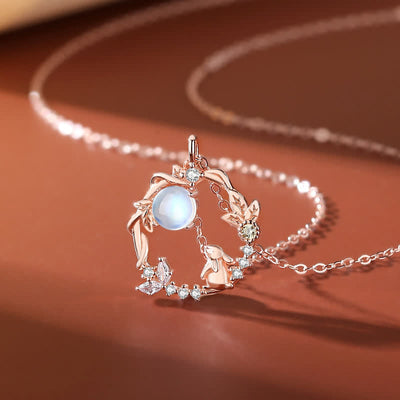
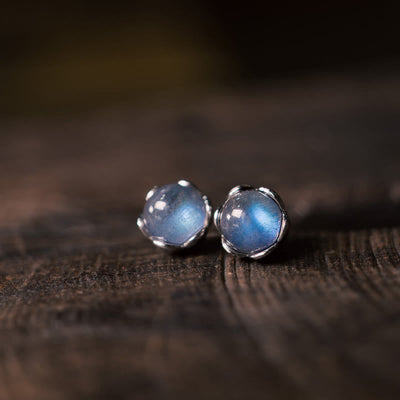

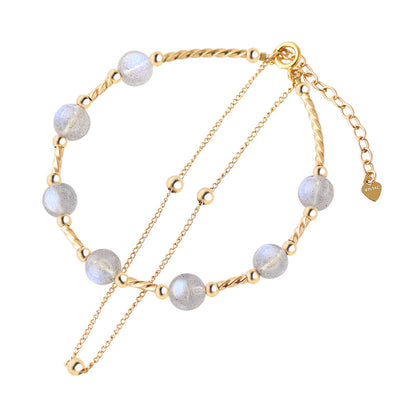
Rainbow Moonstone
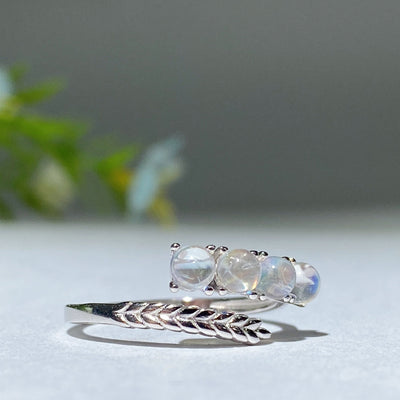
Technically a variety of Labradorite, Rainbow Moonstone is highly prized for its multi-colored flashes of blue, green, and gold. Because of its stunning visual appeal and high demand in the jewelry market, high-quality Rainbow Moonstone often carries a premium price compared to standard peach or white varieties.
Orthoclase and Rare Varieties
Standard moonstone is typically composed of orthoclase moonstone and albite. Rare moonstone varieties, such as those mined historically in Sri Lanka (Ceylon), are becoming increasingly scarce. These stones possess a high degree of transparency and a distinct blue floating light. Collectors often seek out these specimens, and their scarcity drives the moonstone price upward significantly.

Buying Guide: Determining Worth for Jewelry and Specimens
When purchasing moonstone, consider the intent. Are you buying a tumbled stone for a healing grid, or a set piece of jewelry? The setting itself—silver vs. gold—will affect the overall cost, but the stone's grade remains the primary variable.
For mineral collectors, a raw feldspar moonstone specimen might offer great value and geological interest. For jewelry lovers, the cut is vital. Moonstones are almost always cut as cabochons (smooth, domed shapes) rather than faceted, as the dome shape maximizes the adularescence. A poorly cut stone that hides the sheen is worth less than a well-proportioned cabochon that highlights the glow.
Explore Genuine Moonstone Treasures

Bracelet Harmonie Pierre de Lune Arc-en-ciel 8 mm
$24.90
$35.90
Highlight rare rainbow moonstone with exceptional adularescence to illustrate premium price points and assessment tips. Learn more ➔

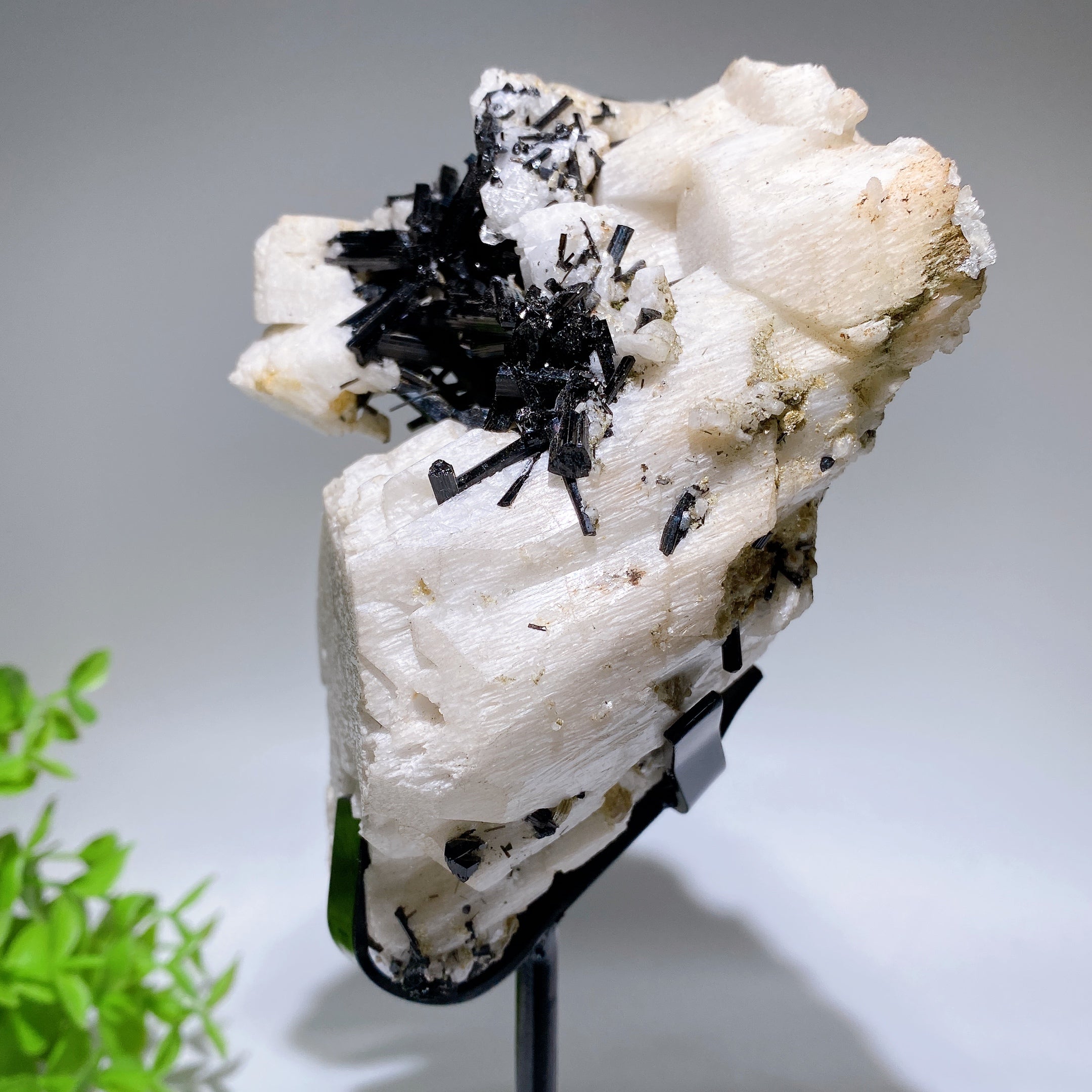
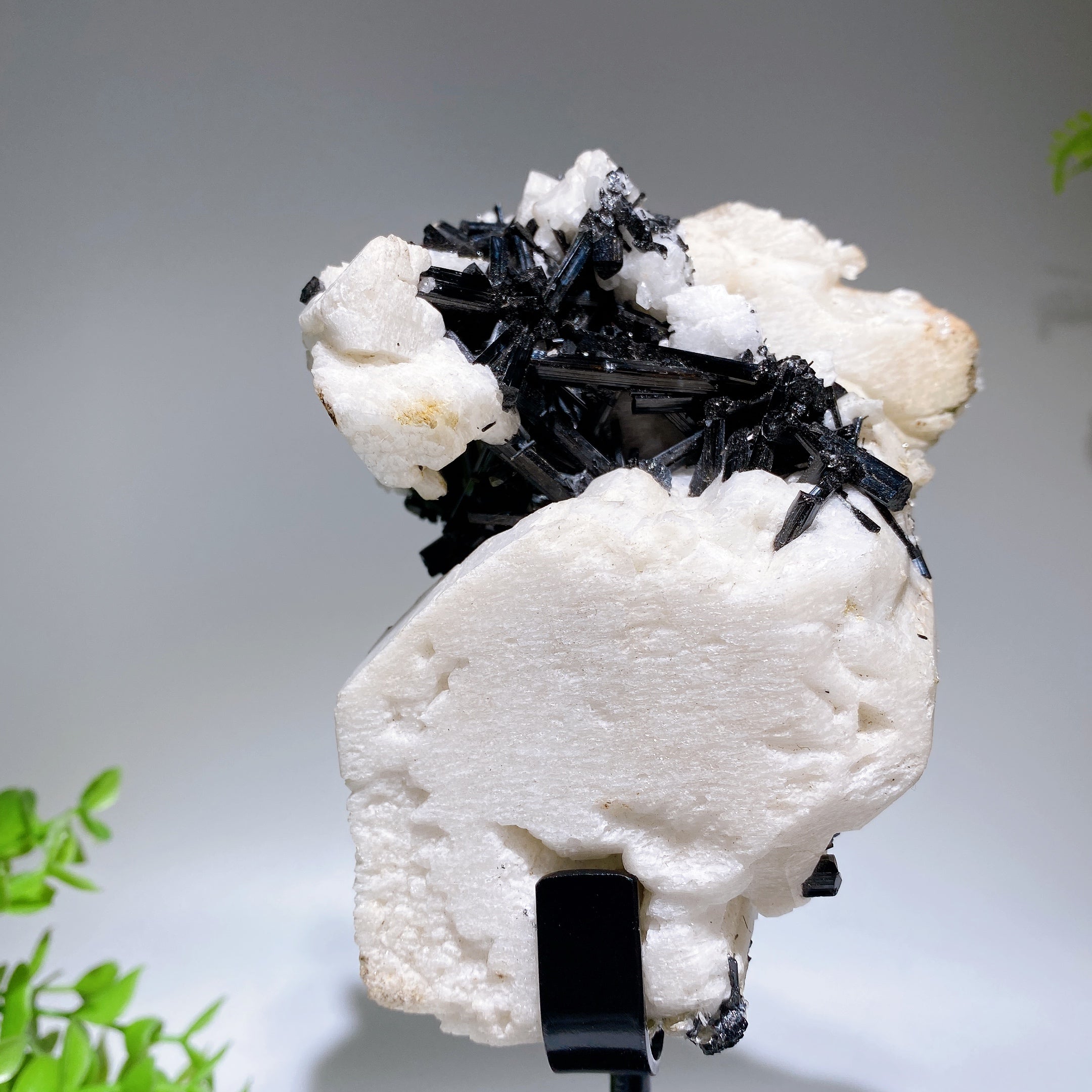
Feature a premium feldspar crystal specimen for mineralogical context and price differentiation in collector & gem markets. Learn more ➔
Conclusion
Investing in moonstone is an investment in natural beauty and spiritual balance. By understanding the factors that dictate moonstone price—from the intensity of the adularescence to the clarity of the gem—you can make informed decisions and avoid synthetics. Whether you choose a rare blue-sheen specimen or a warm peach tumble, ensuring you have authentic moonstone guarantees that you are connecting with the true energy of the earth.
Frequently Asked Questions about Moonstone Value
The worth of real moonstone varies widely based on quality. Common tumbled stones may cost $5 to $20, while high-quality cabochons with strong blue flash and high transparency can range from $20 to over $100 per carat. Rare, top-grade specimens from Sri Lanka can command even higher prices.
The primary factors include body color (colorless is rarest), adularescence (blue sheen is most valuable), clarity (transparent is better than opaque), and size. The cut also matters; a well-centered cabochon that displays the sheen perfectly increases value.
Genuine moonstone often has internal inclusions, layers, or tiny fractures, and its sheen moves as the stone rotates. Synthetic moonstone (like Opalite) is usually flawless, may have air bubbles, and has a static or uniform glow that doesn't change with the viewing angle.
Feldspar is the mineral group to which moonstone belongs. When collectors refer to specific "feldspar moonstone" varieties, they may be looking for rare optical properties, specific origins, or larger raw specimens that are harder to find than commercial-grade stones, driving up the price.
Natural moonstone is distinguished by its unique internal structure (centipedes/cracks) and adularescence. Fakes are often glass or plastic. Treated stones are less common but may be dyed; natural moonstone typically has earthy or neutral tones (peach, grey, white) or clear bodies with blue flash.