Have you ever felt the need to reignite your inner spark or find a deeper sense of stability in a chaotic world? Enter Pyrope Garnet, often hailed as the "Fire Stone." Known for its intense, blood-red coloration and high refractive index, this gemstone is more than just a beautiful adornment; it is a powerhouse of vitality and charismatic energy.
For centuries, the pyrope garnet meaning has been intertwined with passion, courage, and protection. Unlike other stones that offer gentle soothing, Pyrope offers a dynamic surge of life force, making it a favorite among spiritual seekers looking to activate their Root and Crown chakras. Whether you are a collector admiring its value or a spiritual practitioner seeking grounding, understanding this gem's unique properties can be transformative.
In this guide, we will explore the depths of this magnificent mineral, from its geological origins to its metaphysical benefits. You will discover what sets it apart from other garnets, how to use it in jewelry like a pyrope garnet ring, and why it remains a timeless symbol of enduring fire.
What is Pyrope Garnet?
Pyrope is the most well-known member of the garnet family, chemically distinct due to its magnesium-aluminum silicate composition. Its name is derived from the Greek word pyropos, which translates to "fire-eyed" or "fiery-eyed." This is a fitting descriptor, as high-quality specimens exhibit a glowing red brilliance that resembles a burning ember.
While many people simply refer to "garnet" as a generic red stone, Pyrope Garnet is unique. It is often free of visible inclusions, giving it a stunning clarity that is highly prized in the gem trade. Historically, these stones were often referred to as "Bohemian Garnets" due to significant deposits found in the Czech Republic, where they were fashioned into intricate jewelry for royalty.
Did You Know? Pure Pyrope is colorless, but it is rarely found in nature. The deep red color we adore comes from trace amounts of iron and chromium replacing the magnesium in the crystal structure.

The Spiritual Meaning and Metaphysical Properties
The pyrope garnet meaning is deeply rooted in physical vitality and survival instincts. As a stone of the Root Chakra (Muladhara), it provides a strong tether to the earth, helping individuals feel safe, supported, and capable. It is believed to alleviate anxiety by replacing fear with a rush of courageous energy.
Beyond grounding, Pyrope is a stone of inspiration. It is said to stimulate the rise of Kundalini energy, moving dormant power up the spine. This makes it an excellent ally for creatives and entrepreneurs who need the stamina to turn their visions into reality. Its energy is warm and immediate, often described as a "protective shield" that wards off emotional drainage.
Emotional and Healing Benefits
- Vitality Boost: It is often used to combat lethargy and low energy levels.
- Emotional Release: Helps in releasing guilt and shame, opening the heart to self-love.
- Passion and Intimacy: Known to revitalize romantic relationships and enhance charisma.
Pyrope Garnet vs. Almandine: Understanding the Difference
One of the most common questions among gemstone enthusiasts is regarding the difference between Pyrope Garnet vs Almandine. While both are red garnets and often look similar to the untrained eye, they have distinct chemical and visual differences.
Almandine Garnet is an iron-aluminum silicate. It tends to be darker, often with a brownish or violet tint, and is the most common form of garnet. Pyrope Garnet, being magnesium-rich, typically displays a brighter, cleaner red, sometimes leaning towards pinkish or purple hues (as seen in Rhodolite, which is a mix of the two). In the gem market, Pyrope is often valued for its lack of dark "extinction" areas within the stone.
To truly understand these nuances and see the visual differences, watch the video below which breaks down the red garnet family.
Pyrope Garnet Value and Quality Factors
When looking at pyrope garnet value, color is king. The most desirable stones exhibit a vivid "pigeon blood" red without being too dark (oversaturated) or too pale. Stones that maintain their red brilliance even in dim lighting command the highest pyrope garnet price.
Clarity is also essential. Unlike emeralds, which are expected to have inclusions, Pyrope garnets are generally "eye-clean." A stone with visible flaws will see a significant drop in value. Because Pyrope crystals can grow quite large, finding substantial carats for jewelry is possible, though prices rise exponentially with size and color quality.

If you are interested in the scientific grading of these gems, the International Gem Society provides detailed data on refractive indices and specific gravity which help gemologists identify true Pyrope.
How to Use Pyrope Garnet in Daily Life
Integrating this stone into your life can be done through meditation, feng shui, or simply wearing it. Because of its hardness (7 to 7.5 on the Mohs scale), it is durable enough for daily wear.
Meditation and Energy Work
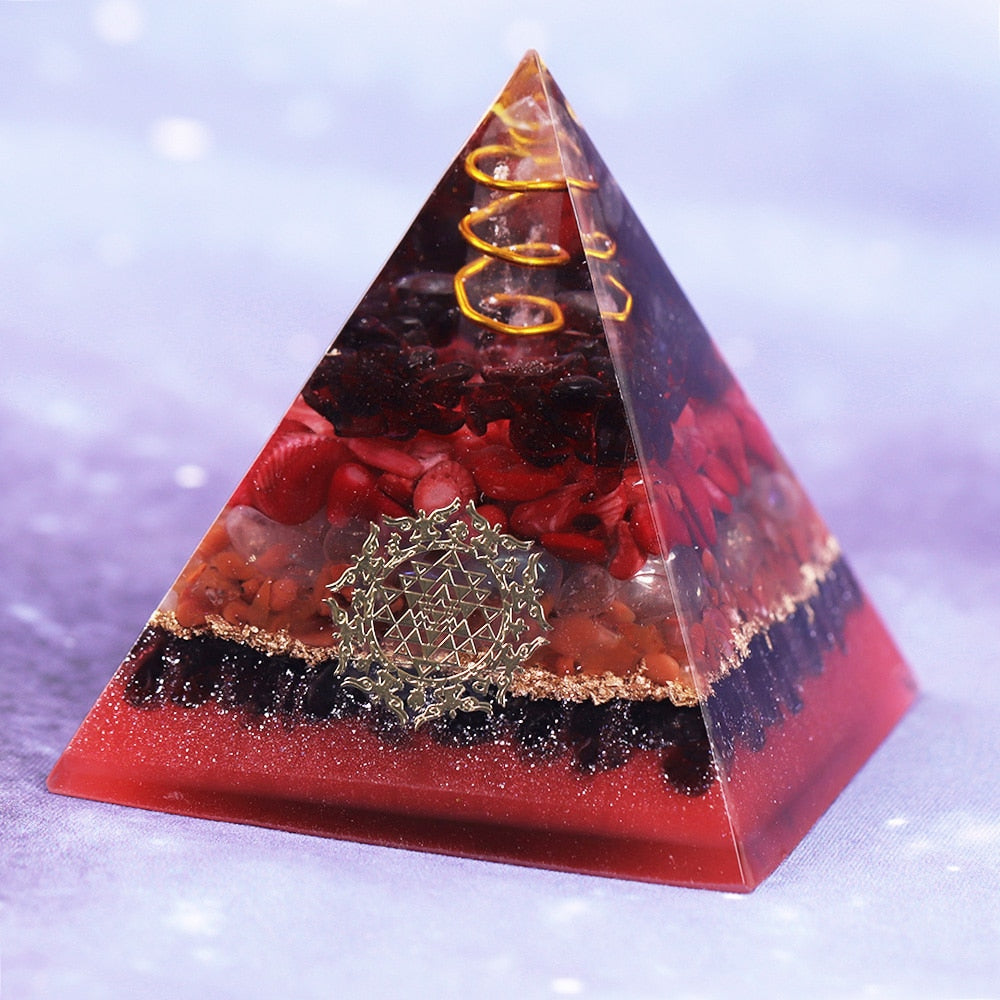
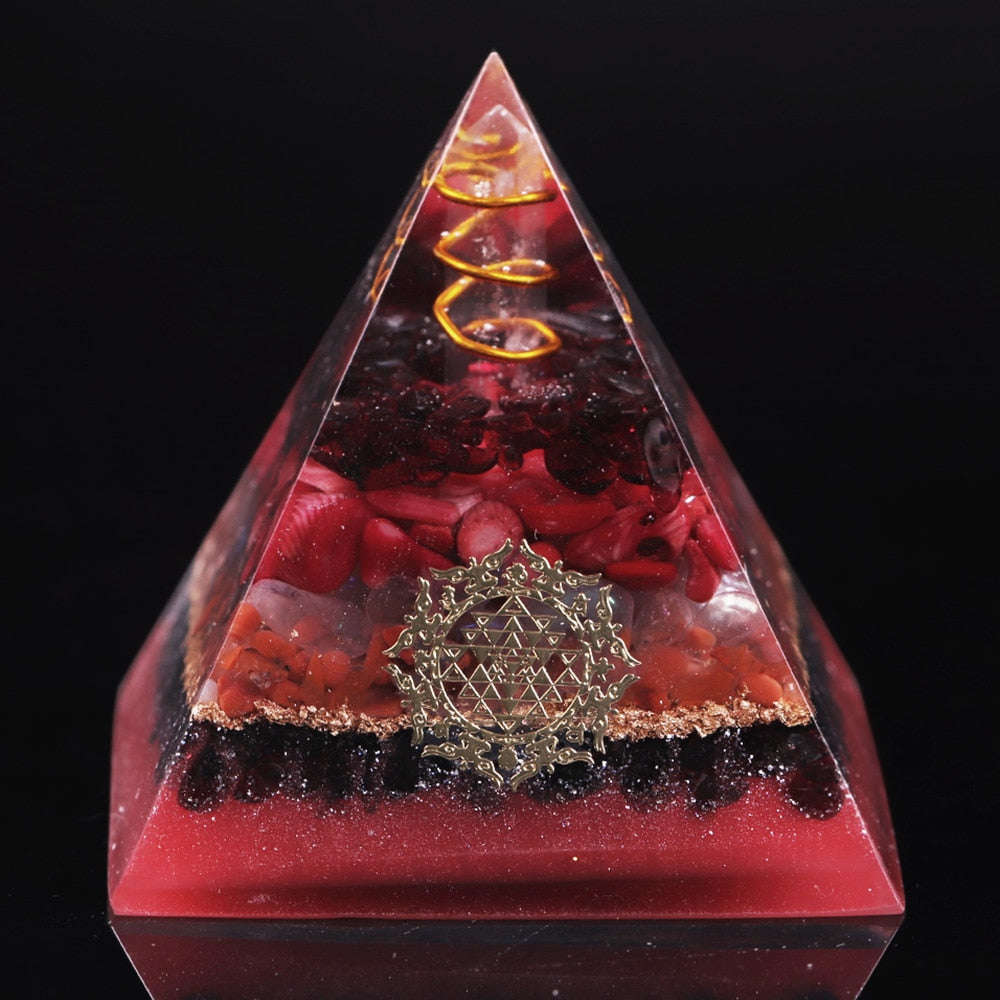
Holding a Pyrope tumbled stone or using a shaped tool during meditation can help anchor your energy. Many practitioners use it to clear the chakras, visualizing a red light moving from the base of the spine upwards. For deep energy work, tools like pyramids can amplify the stone's natural properties.

Pyramide d'orgonite en grenat de la Création Infinie
$49.99 $59.99
Channel the energizing power of garnet into your meditations with this orgonite pyramid, crafted for balance and revitalization.
Explore ProductWearing Pyrope Garnet Jewelry
Jewelry is perhaps the most popular way to utilize this stone. A pyrope garnet ring worn on the dominant hand is said to project confidence and authority. Necklaces resting near the heart can help circulate vitality throughout the body. The deep red hue pairs exceptionally well with gold, as seen in traditional Victorian designs, but also looks striking in modern silver settings.

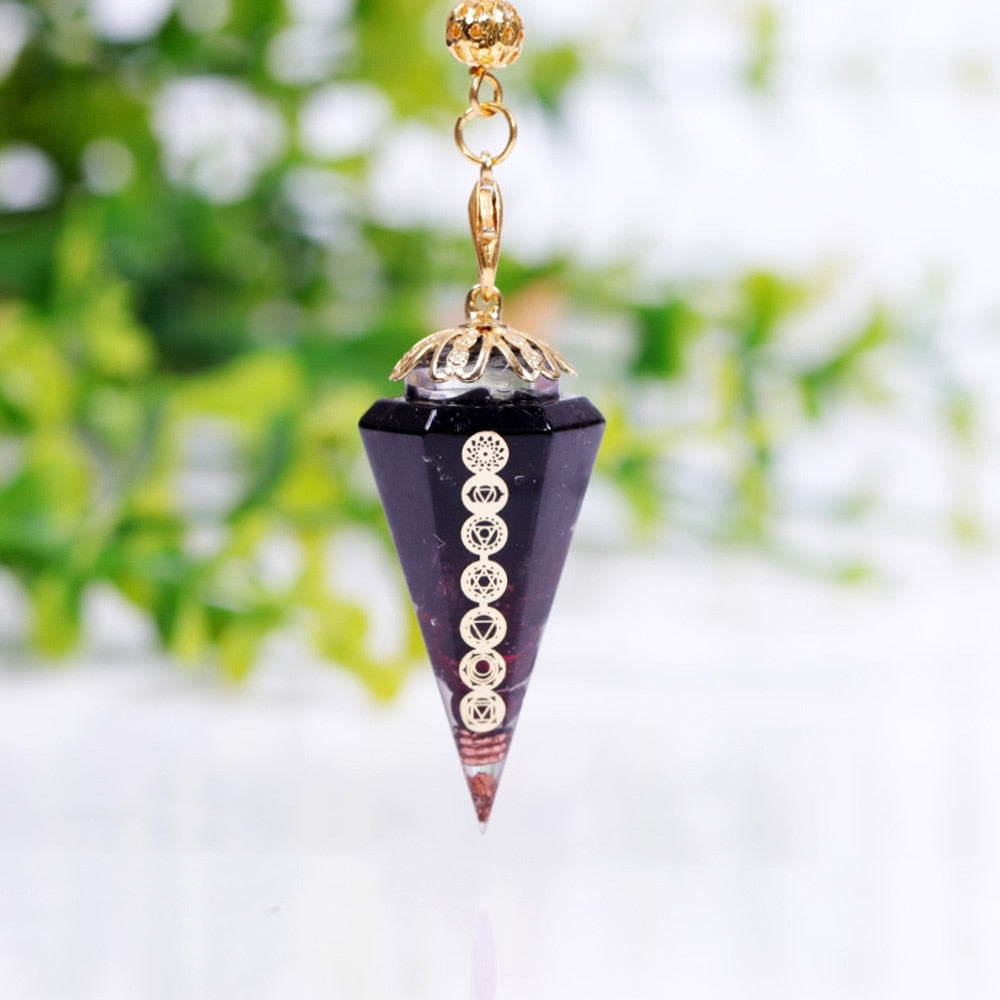
For those interested in dowsing or seeking answers from their subconscious, incorporating garnet into a pendulum practice brings a grounded, truthful energy to the session.
Tools for Grounding and Passion
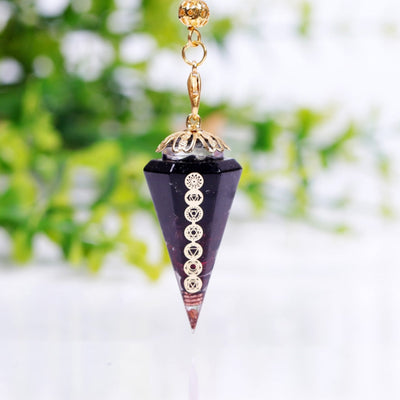
Deepen your spiritual journey—this pendulum blends obsidian's grounding with the transformative energy of garnet for insightful rituals. Learn more ➔

Bracelet Grenat Quartz Fraise Poignet 14-16 cm
$24.90
$35.90
Wear the passionate fire of pyrope garnet and strawberry quartz as a bracelet—embrace love, vitality, and spiritual balance daily. Learn more ➔
Conclusion
Pyrope Garnet is truly the "Fire Stone," offering a unique blend of stunning visual appeal and potent metaphysical energy. Whether you are drawn to it for its deep red beauty or its ability to ground and inspire passion, this gemstone is a valuable addition to any collection. By understanding its properties and how to distinguish it from other varieties, you can ensure you are selecting a piece that resonates with your personal energy and style.
Frequently Asked Questions about Pyrope Garnet
Yes, fine quality pyrope garnets are valuable, especially those that are eye-clean with a vivid red color. While they are generally more affordable than rubies, large specimens with excellent clarity and cut can command significant prices among collectors.
Pyrope garnet is a magnesium-aluminum silicate mineral and the only member of the garnet family that is always red in natural samples. It is known for its high refractive index and deep, fiery coloration, often free from inclusions.
The main difference lies in their chemical composition: Pyrope is magnesium-rich, while Almandine is iron-rich. Visually, Pyrope tends to be a cleaner, brighter red, whereas Almandine is often darker with brownish or violet undertones.
Spiritually, pyrope garnet is associated with the Root Chakra, symbolizing vitality, courage, and stability. It is often called the "Fire Stone" because it is believed to inspire passion, creativity, and the strength to overcome anxiety.
Pyrope garnet is durable and brilliant, making it popular for rings, necklaces, and earrings. It is often faceted to maximize its sparkle and set in both gold and silver. Historically, it was famously used in Bohemian cluster jewelry.