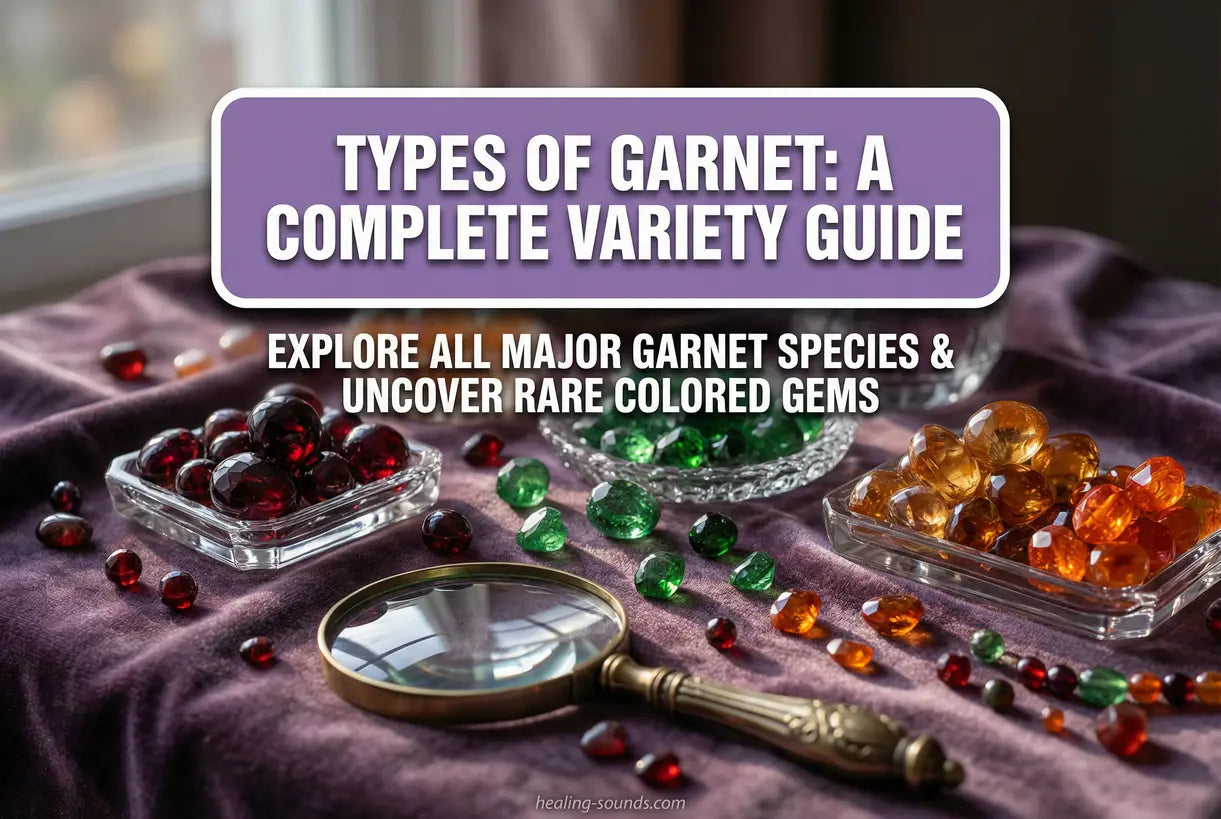
When most people think of garnet, they immediately visualize a deep, wine-red gemstone. While this is the most common association, the reality is far more vibrant. The different types of garnet actually encompass a magnificent spectrum of colors, ranging from fiery oranges and vibrant greens to deep purples and even color-changing varieties. For collectors, jewelry enthusiasts, and spiritual seekers alike, understanding the diverse garnet varieties opens the door to a world of geological wonder and specific energetic properties.
Garnet is not a single stone but a complex group of silicate minerals that share a similar crystal structure but differ in chemical composition. Whether you are looking for a stone to balance your Root Chakra or a rare gem to elevate a jewelry collection, knowing the distinctions between species like almandine, pyrope, and demantoid is essential. In this guide, we will explore the major types of garnet stones, their unique colors, and what makes each one special.
The Science Behind the Sparkle: Main Garnet Species
To truly understand the types of garnet, we must look at their mineralogy. Gemologists classify garnets into six main species. While these rarely occur in their pure form in nature—often mixing to create hybrids—they form the basis for every garnet gemstone you see on the market.

The six primary species are typically divided into two main series based on their chemical elements:
- Pyralspite Series (Aluminum-rich): Includes Pyrope, Almandine, and Spessartine.
- Ugrandite Series (Calcium-rich): Includes Uvarovite, Grossular, and Andradite.
Most gem-quality garnets are actually a blend of these species. For example, the popular Rhodolite is a mixture of Pyrope and Almandine, resulting in its signature raspberry-red hue.
The Red and Pink Spectrum: Classics and Favorites
Red garnets are the most abundant and historically significant. These are the stones that have adorned the armor of crusaders and the crowns of kings. If you are exploring garnet colors for traditional jewelry or grounding energy, these are the varieties you will likely encounter.
Almandine Garnet
Almandine garnet is the most common member of the garnet family. It is typically opaque to semi-translucent and appears in a deep brownish-red to purplish-red color. Because of its abundance and hardness (7.5 on the Mohs scale), it is widely used in jewelry and abrasive industries. Energetically, it is strongly linked to the Root Chakra, offering grounding and protection.
Pyrope Garnet
Often cleaner and more transparent than Almandine, Pyrope garnet is known for its blood-red coloration, which can sometimes resemble a ruby. In fact, historically, they were often mistaken for rubies. The name comes from the Greek word for "fire," referencing its intense color saturation.
Rhodolite Garnet
Rhodolite is a highly desirable hybrid of Pyrope and Almandine. It is distinguished by its lighter, purplish-red or raspberry tone, lacking the brownish secondary hues often found in standard red garnets. It is a favorite among jewelers for its brilliance and clarity.

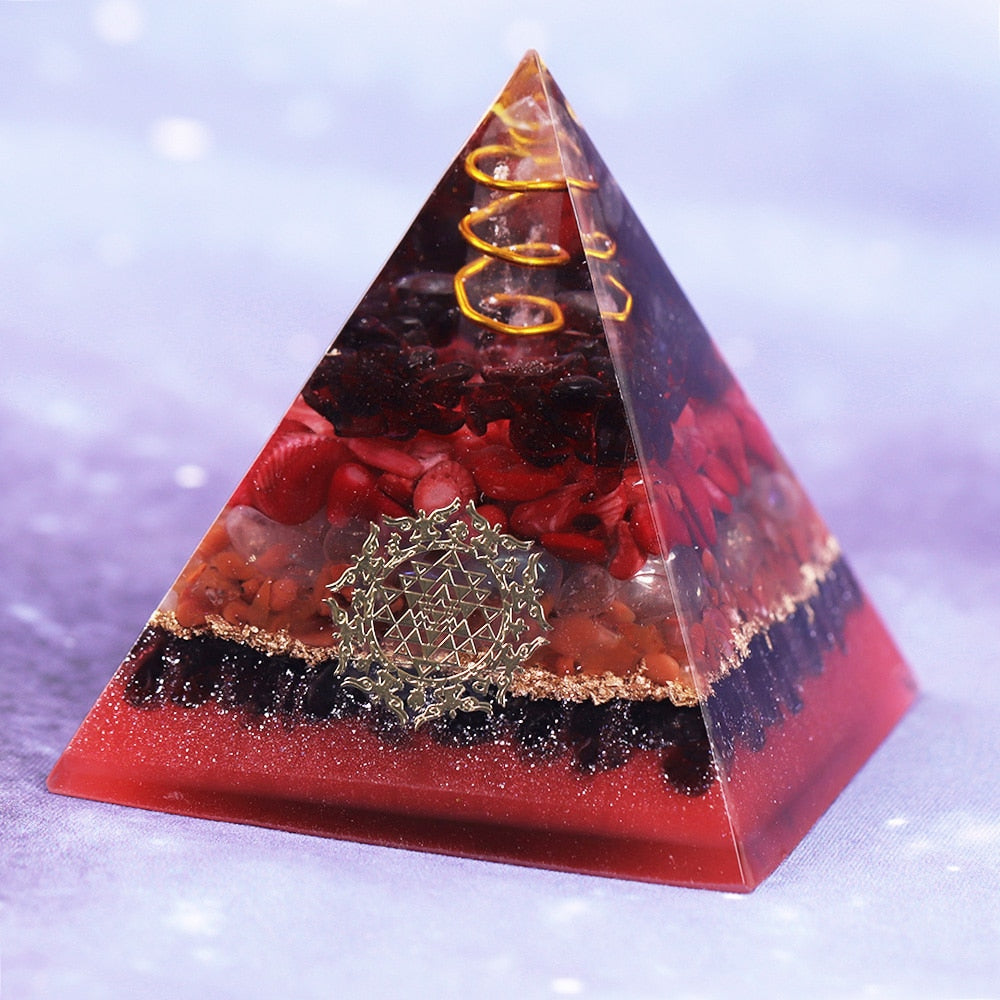
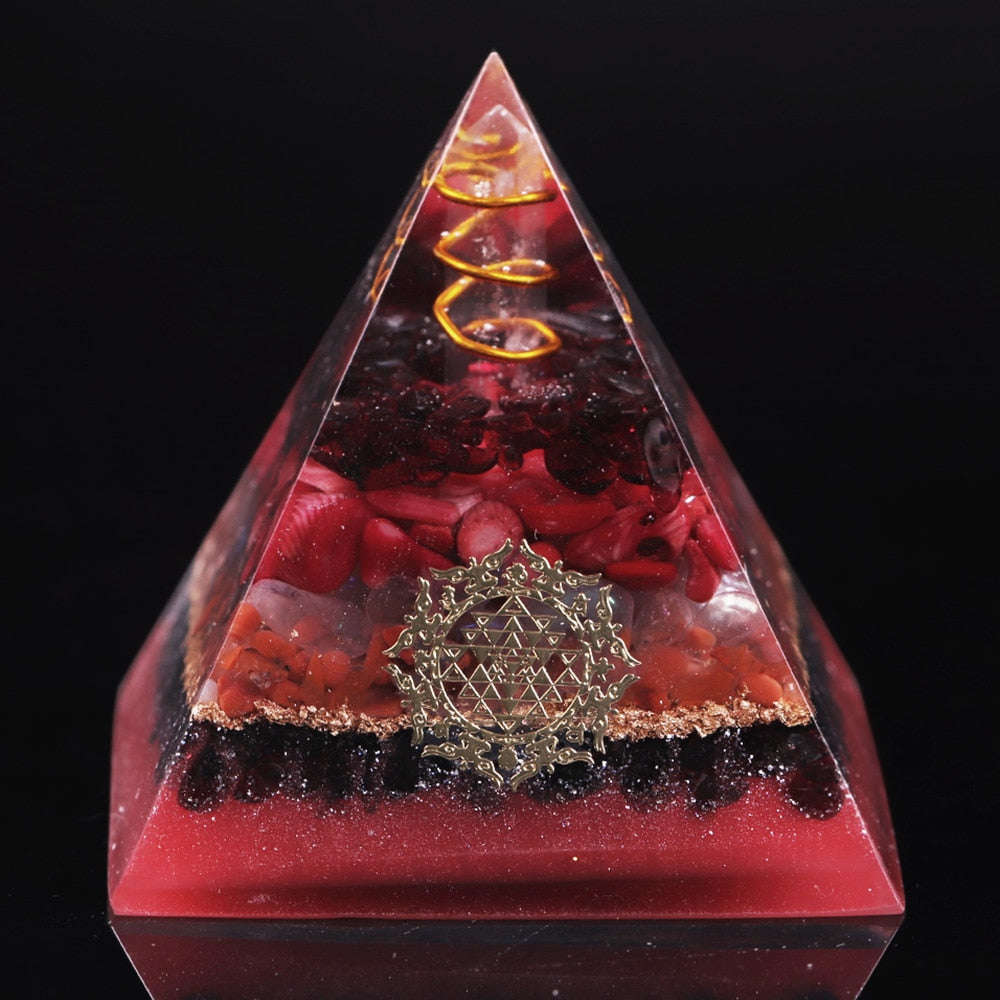
Pyramide d'orgonite en grenat de la Création Infinie
$49.99 $59.99
Experience the energy of garnet varieties in your space with this orgonite pyramid, designed for balance and manifestation.
Explore ProductThe Rare and Exotic: Orange, Green, and Black
Beyond the reds, the types of garnet expand into rare and high-value territories. These varieties are often prized by collectors for their scarcity and exceptional brilliance (refractive index).
Spessartine (Spessartite)
Once a collector's rarity, Spessartine garnet is famous for its vibrant orange to reddish-orange colors. The most valuable variety is "Mandarin Garnet," a bright, neon-orange stone found in Namibia. These stones are incredibly lively and are associated with the Sacral Chakra, governing creativity and desire.
Grossular Garnet
The Grossular species offers the widest range of colors, from colorless to yellow, orange, and green. Two varieties stand out:
- Tsavorite: A vivid, emerald-green garnet found in East Africa. It rivals the emerald in color but is more durable and brilliant. It is one of the most expensive types of garnet stones.
- Hessonite: Known as the "Cinnamon Stone" due to its warm, honey-yellow to brownish-red color. It often has a unique "treacle" or heat-wave effect internally.
Andradite Garnet
This species includes the rarest and most valuable of all garnets: the Demantoid. Demantoid garnet is green and is famous for having a dispersion (fire) higher than that of a diamond. Another variety is Melanite, a rich, opaque black garnet used often in mourning jewelry or protective talismans.
Unusual Optical Phenomena
Some rare types of garnet display fascinating optical properties. Color-change garnets, typically a mix of Pyrope and Spessartine, can shift from blue-green in daylight to purple-red in incandescent light. This phenomenon makes them highly sought after by connoisseurs. Additionally, Uvarovite is a rare, bright green garnet that usually forms as a druzy crust of tiny crystals rather than large gemstones, making it unique for raw jewelry pieces.

Choosing the Right Garnet for You
With so many garnet varieties available, selecting the right one depends on your purpose. Are you looking for durability in daily wear, or a specific vibrational frequency for healing?
For Jewelry and Durability
If you plan to wear your garnet daily, stick to the harder varieties like Pyrope, Almandine, and Tsavorite. These have a hardness of 7 to 7.5, resisting scratches relatively well. Demantoid, while stunning, is softer (6.5) and better suited for pendants or earrings rather than rings worn every day.
For Healing and Metaphysics
In crystal healing, the color dictates the energy. Red garnets (Almandine, Pyrope) are stones of vitality, passion, and grounding. Green garnets (Tsavorite, Demantoid) resonate with the Heart Chakra, promoting prosperity and emotional healing. Orange garnets (Spessartine) ignite creativity and confidence.

Wear the Energy of Garnet

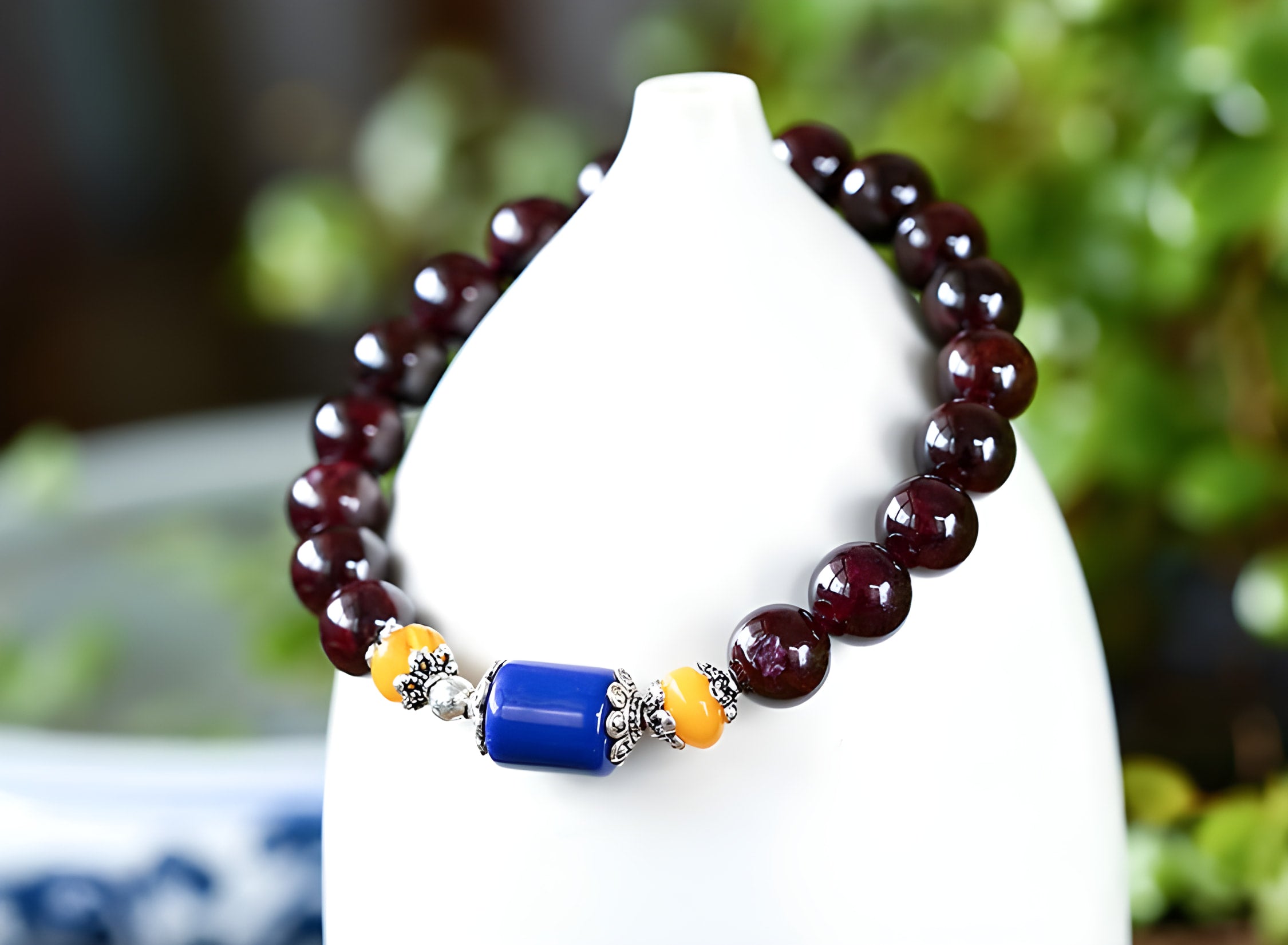
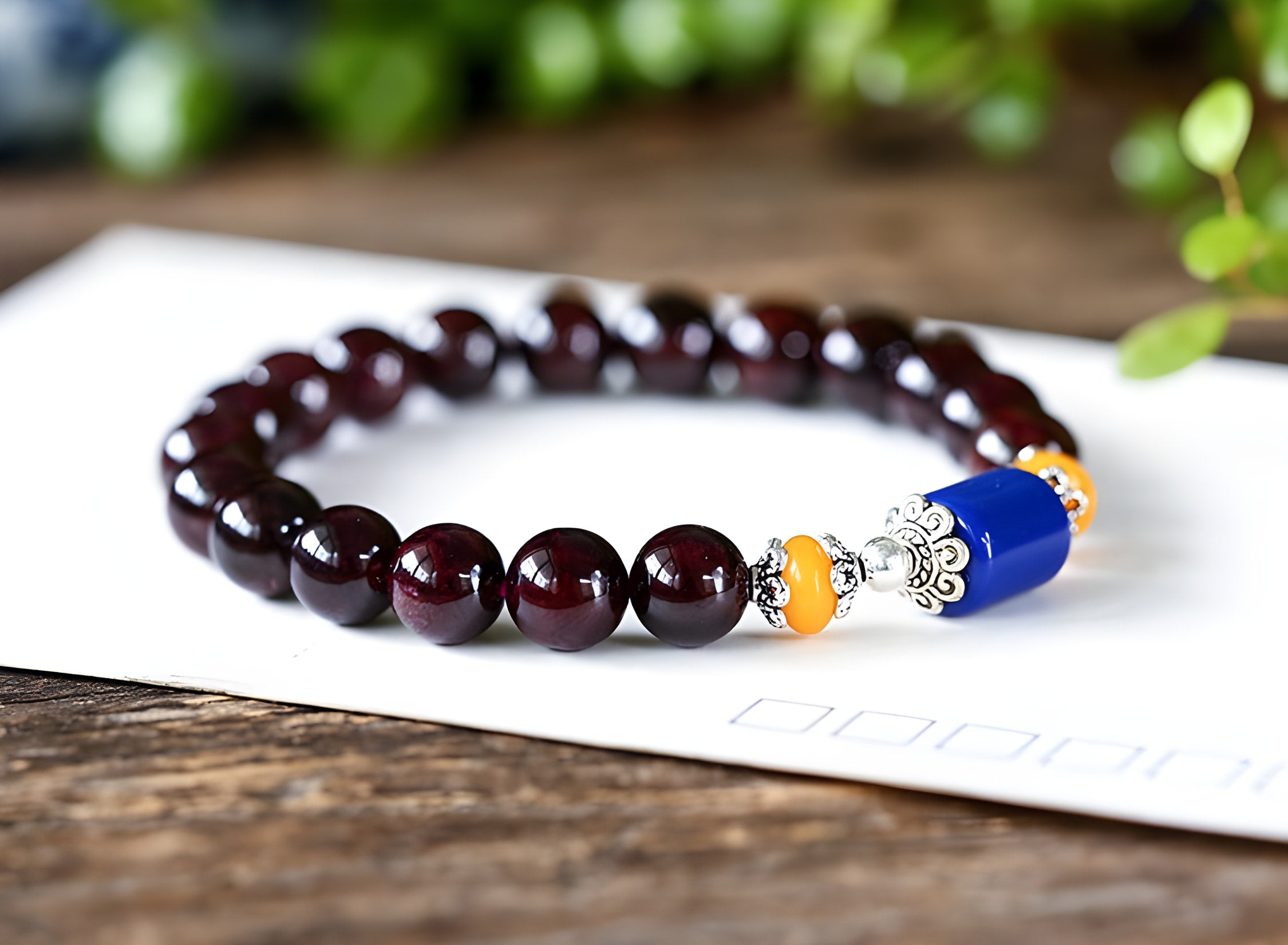
Bracelet en grenat pour l'autonomisation et l'équilibre
$29.99
$39.99
Showcase classic garnet beauty and spiritual meaning with this gemstone bracelet, perfect for any garnet lover or collector. Learn more ➔

Bracelet Grenat Quartz Fraise Poignet 14-16 cm
$24.90
$35.90
Celebrate the fusion of rare garnet and strawberry quartz in this elegant, symbolic bracelet—ideal for exploring unique varieties. Learn more ➔
Conclusion
The world of garnet is vast and surprisingly colorful. From the deep, grounding reds of almandine to the vivid, life-affirming greens of tsavorite, there is a stone in this family for every personality and purpose. Understanding the different types of garnet allows you to appreciate not just their beauty, but their geological rarity and unique energetic signatures. Whether you are adding a piece to your healing crystal collection or selecting a gemstone for a custom ring, exploring these varieties ensures you find a gem that truly resonates with you.
Frequently Asked Questions about Types of Garnet
"Garnet" is the name of the entire mineral group. Rhodolite is a specific variety within that group. It is a hybrid mixture of Pyrope and Almandine species, known for its distinctive raspberry-red or purplish-red color, which is generally lighter and brighter than standard red garnets.
Demantoid is the rarest and most valuable variety of Andradite garnet. It is expensive due to its extreme scarcity, its brilliant emerald-green color, and its "fire" (dispersion), which actually exceeds that of a diamond. High-quality gem stones over one carat are very rare.
Garnet comes in a rainbow of colors. While red is the most famous, garnets can be orange, yellow, green, purple, brown, black, pink, and colorless. The only color not typically found in common garnet varieties is a pure blue, although rare color-change garnets can appear blue in certain lighting.
Almandine and Pyrope are the most historically famous and widely recognized "red" garnets. However, in modern gemology, the green Tsavorite and Demantoid garnets have become famous for their rarity and beauty, often rivaling precious stones like emeralds.
There are over 20 mineral species in the garnet group, but only five or six are commonly used as gemstones: Pyrope, Almandine, Spessartine, Grossular, Andradite, and Uvarovite. From these main species, numerous trade varieties like Rhodolite, Tsavorite, and Hessonite are derived.