
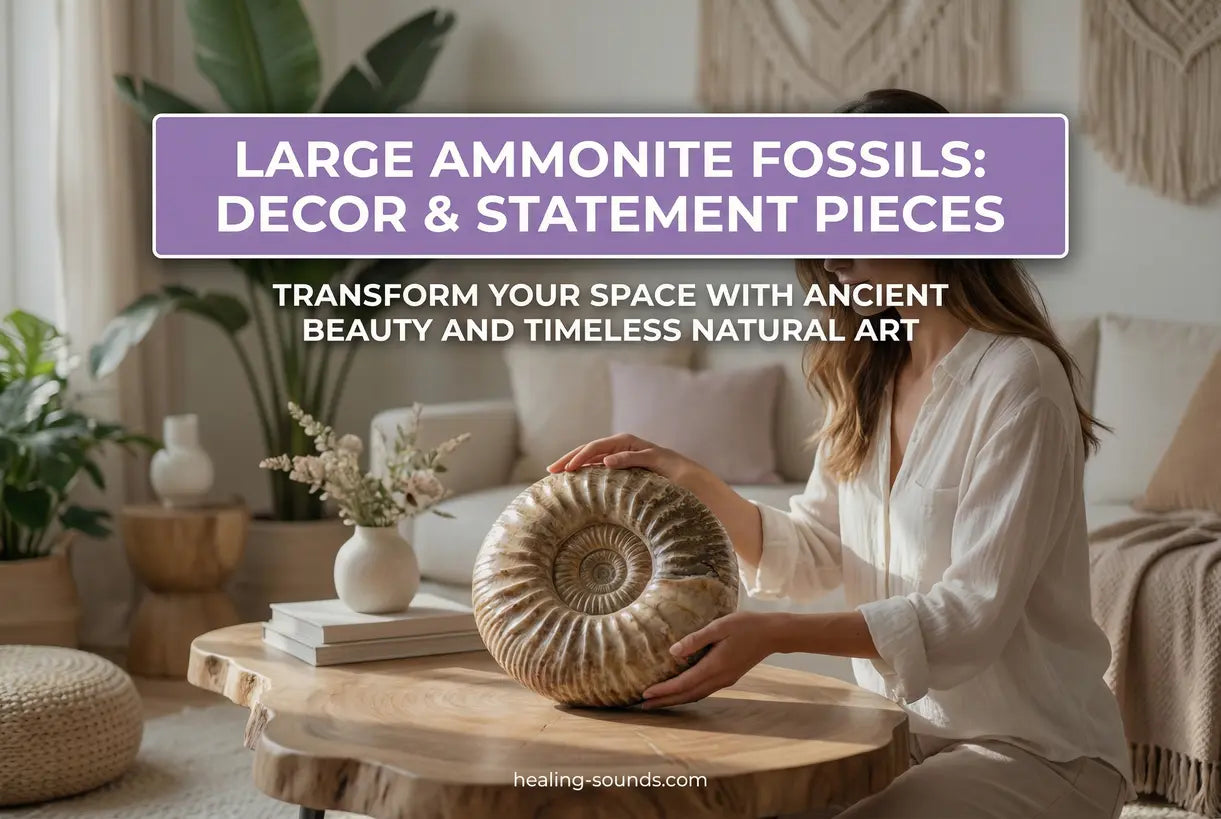
Imagine walking into a room and being immediately drawn to a stunning, spiral masterpiece that predates the dinosaurs. A large ammonite fossil is more than just a decorative object; it is a frozen moment in time, a natural sculpture crafted by oceans millions of years ago. For interior designers and collectors alike, these prehistoric treasures offer a unique way to bring the grounding energy of the earth into modern living spaces.
Whether you are looking to elevate your office with a statement fossil piece or add a touch of ancient mystery to your living room, ammonites serve as sophisticated conversation starters. In this guide, we will explore the aesthetic appeal of ammonite decor, how to style these magnificent specimens, and what gives them their enduring value.
The Timeless Appeal of Large Ammonite Fossils
The allure of a large ammonite specimen lies in its perfect geometry. The spiral shape of the ammonite shell follows the Fibonacci sequence, a mathematical pattern often referred to as the "Golden Ratio," which the human eye finds naturally harmonious and pleasing. This inherent beauty makes fossil home decor adaptable to almost any interior design style, from minimalist modern to rustic bohemian.

Unlike manufactured art, every fossil is entirely one-of-a-kind. When you display a large polished ammonite, you are showcasing millions of years of geological history. The rich earth tones—ranging from deep browns and ambers to iridescent flashes—add warmth and texture to neutral spaces.
Understanding Value and Quality
When searching for a large ammonite fossil for sale, it is helpful to understand what drives their value. While size is a significant factor, the quality of preservation is equally important. Top-tier specimens often feature distinct ribbing, well-defined sutures (the intricate patterns on the shell), and sometimes even opalization or pyritization, where minerals have replaced the original organic material, creating a gemstone-like appearance.
Collectors often seek out specimens that have been professionally prepped to reveal these internal chambers. A high-quality statement fossil piece can serve as an investment as well as a stunning visual anchor for a room.

Styling Your Space with Fossil Decor
Integrating a large ammonite fossil into your home decor requires a thoughtful approach to ensure it gets the attention it deserves. Because these pieces are often heavy and visually dense, they work best as focal points. Placing a large specimen on a sturdy mantelpiece, a dedicated pedestal, or a heavy wooden desk allows the fossil to command the space without clutter.
Lighting plays a crucial role in showcasing ammonite decor. Direct spotlighting can bring out the intricate details of the spiral and the sheen of the polish. For specimens with iridescence, natural light can reveal dazzling spectrums of color that change throughout the day.

Consider the color palette of the room. The earthy hues of a fossil contrast beautifully with cool blues and greens, or they can complement a warm, neutral palette of creams and beiges. For a bold, modern look, place a dark, polished ammonite against a stark white wall.
Complementing Fossils with Crystal Energy
Many collectors enjoy pairing fossil home decor with crystals and minerals to create a "curated nature" aesthetic. The grounding, ancient energy of a fossil pairs exceptionally well with the high vibrational energy of crystals like quartz or citrine. Mixing textures—the smooth polish of an ammonite against the raw jagged points of a geode—adds depth and visual interest to your display.
When arranging a vignette, use the "rule of three." For example, you might group a large ammonite specimen with a tall crystal cluster and a smaller mineral sphere. This creates balance and guides the eye through the display.
Complete Your Natural Sanctuary
The Science and Preparation Behind the Beauty
Ammonites were marine mollusks that thrived in the oceans from the Devonian period until their extinction alongside the dinosaurs at the end of the Cretaceous period. The intricate chambers you see in a cut and polished fossil were once used by the creature to regulate buoyancy, allowing it to move through ancient seas.

Preparing a raw nodule into a display-worthy piece is an art form in itself. It takes skilled craftspeople hours of careful work to reveal the internal structure without damaging the fossil. For those interested in the fascinating process of how these raw stones are transformed into polished decor, the video below offers an excellent insight into the secrets hidden inside these ancient stones.
For more detailed scientific context, reputable sources like the Natural History Museum provide extensive information on the biology and history of these creatures.
Conclusion
Incorporating a large ammonite fossil into your space is a choice to embrace natural history, art, and timeless design simultaneously. These pieces offer a grounding presence and a fascinating story that spans millions of years. Whether displayed on a sleek modern stand or nestled among books and crystals, a statement fossil piece transforms a house into a home filled with wonder and elegance.
Frequently Asked Questions about Ammonite Fossils
The largest known ammonite species is Parapuzosia seppenradensis. A specimen found in Germany in 1895 measures approximately 1.8 meters (about 5.9 feet) in diameter. It is estimated that if complete, it would have exceeded 2.5 meters in width.
Yes, ammonite fossils can be legally sold and purchased in most parts of the world. They are abundant and not typically restricted like some vertebrate fossils (such as dinosaur bones) might be, provided they are collected ethically and in accordance with local laws.
Yes, many ammonites are valuable, though the price varies drastically. Common small specimens are very affordable, while large, iridescent, or perfectly preserved statement pieces can fetch thousands of dollars due to their rarity and decorative appeal.
Some of the rarest ammonites are those that exhibit "ammolite," a gem-quality iridescent shell found primarily in the Bearpaw Formation of North America. Rare heteromorph ammonites (those with uncoiled shells) are also highly prized by collectors.
An ammonite is an extinct marine mollusk belonging to the class Cephalopoda. They are related to modern squids and octopuses but lived inside a coiled, chambered shell. They went extinct around 66 million years ago.