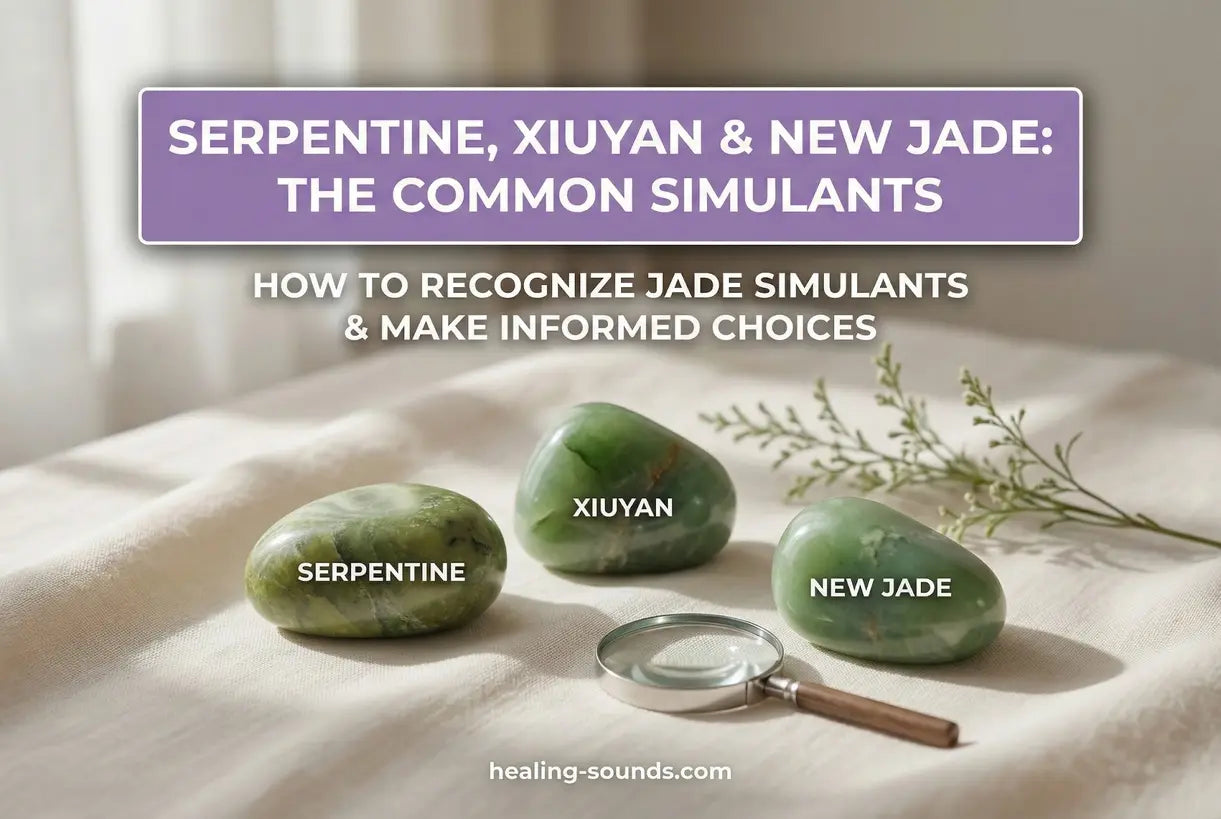
The world of green gemstones is vast and often confusing, especially when terms like serpentine jade, Xiuyan jade, and New Jade are used interchangeably with authentic jade. For spiritual wellness seekers and crystal collectors, understanding the true nature of your stone is crucial—not just for the sake of value, but to connect deeply with its specific metaphysical properties. While these stones are often classified as jade simulants, they possess their own unique vibration and beauty that deserves recognition.
In this guide, we will clarify the differences between genuine jade (nephrite and jadeite) and its common lookalikes like the serpentine stone. You will learn how to identify these minerals, understand the specific Xiuyan jade properties, and discover why "New Jade" might actually be the perfect stone for your spiritual practice, even if it isn't "real" jade.
The Reality of Serpentine Jade vs. Authentic Jade
The most common question we hear is: Is serpentine jade real jade? The short answer is no. From a geological perspective, "jade" refers exclusively to two minerals: Jadeite and Nephrite. However, historically and commercially, the term has been applied loosely to many opaque, green stones used for carving.
Serpentine jade is actually a group of minerals (primarily antigorite and lizardite) that bear a striking resemblance to nephrite jade. Because they are abundant and easier to carve, they have been used for centuries as jade simulants. While they share the lush green aesthetic, they differ significantly in chemical composition and hardness.
- Authentic Jade: 6.0 to 7.0 on the Mohs hardness scale. Extremely tough and durable.
- Serpentine (New Jade/Xiuyan): 2.5 to 5.5 on the Mohs hardness scale. Softer, waxy luster, and easier to scratch.
Recognizing these differences ensures you don't overpay for a simulant while believing it is precious jadeite. However, this doesn't make serpentine "worthless." In fact, it is a powerful stone for Kundalini awakening and earth connection.

Deconstructing the Names: Xiuyan, New Jade, and Serpentine
Navigating the terminology is key to jade simulant identification. You will often encounter these three names, and while they are related, they have distinct market meanings.
1. Xiuyan Jade
Named after Xiuyan County in Liaoning Province, China, Xiuyan jade is one of the most famous varieties of serpentine. It has a long history in Chinese culture, often used for intricate carvings and burial suits. It is typically translucent with a color range from light green to dark olive. While it is technically serpentine, it is highly respected in its own right for its craftsmanship and history.
2. New Jade
New Jade is a trade name often used in Western metaphysical shops. It typically refers to a light, mint-green variety of serpentine stone. It is softer than Xiuyan and is widely used for tumble stones, beads, and beginner carvings. Its energy is gentle, soothing, and connected to the Heart Chakra.
3. Serpentine Stone
This is the umbrella geological term. Whether sold as "Korean Jade," "Olive Jade," or "New Jade," these are all varieties of the serpentine mineral group. The name comes from the stone's mottled, snake-skin-like appearance, which ancients believed offered protection against snakebites and poisoning.

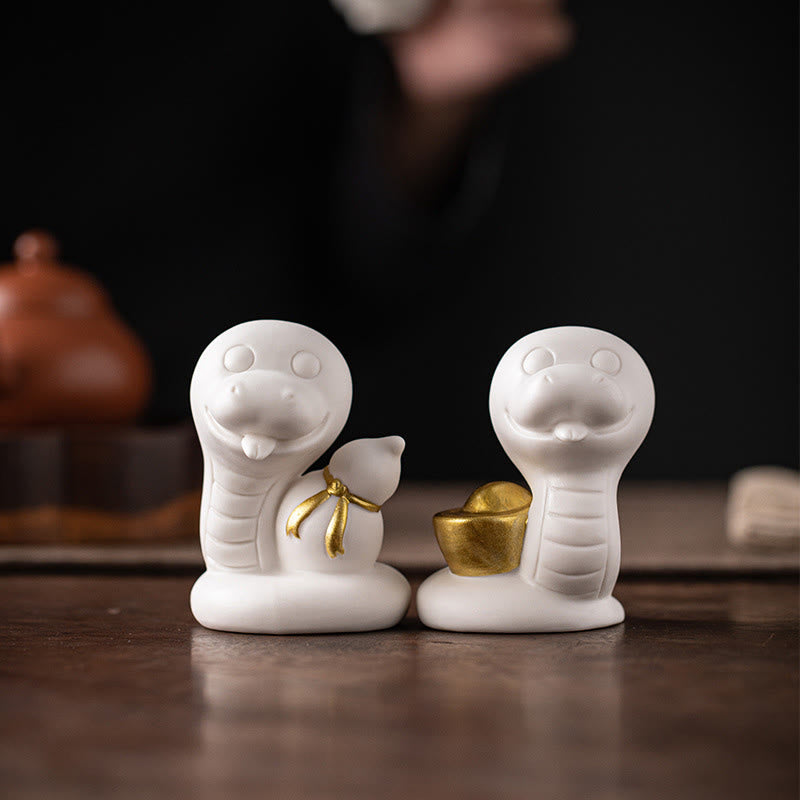
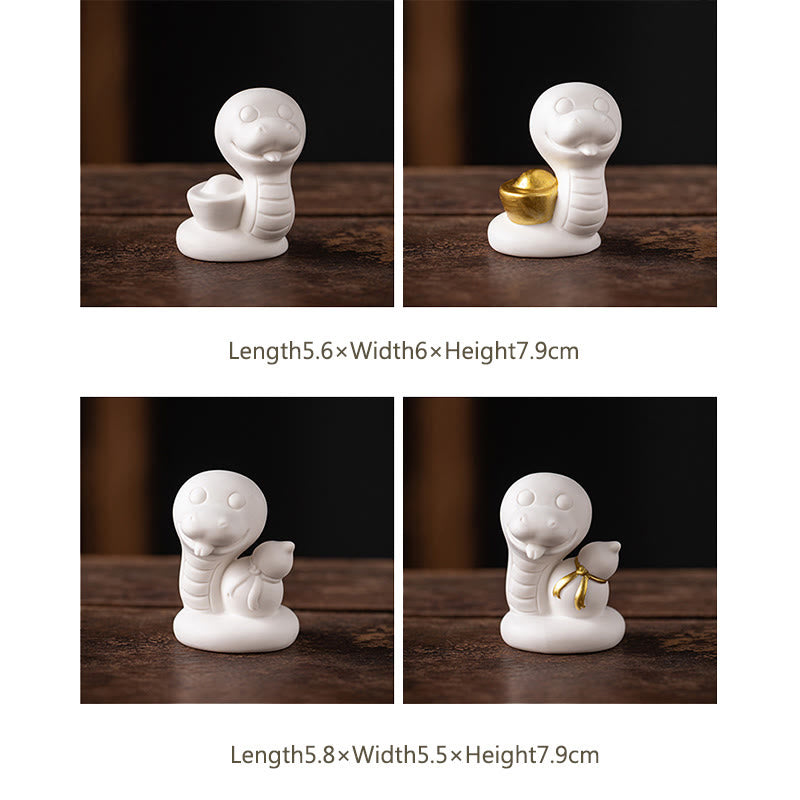
Figurine en céramique de la calebasse et du lingot de l'Année du Serpent
$33.90 $48.90
Honor serpentine symbolism and transformation with this striking ceramic snake figurine—a perfect complement to discussions of jade simulants.
Explore ProductHow to Identify Serpentine, Xiuyan Jade, and New Jade
If you are looking at a "jade" bracelet or carving and want to know its true identity, there are a few tests you can perform. New jade vs jade identification largely comes down to hardness and texture.
The Scratch Test
Because authentic jade is harder than glass (and most steel), it cannot be easily scratched by a standard knife blade. Serpentine jade, being much softer (Mohs 2.5–5.5), can often be scratched by a steel blade or even a copper penny. Note: Always ask permission before testing a stone in a shop!
Visual Inspection
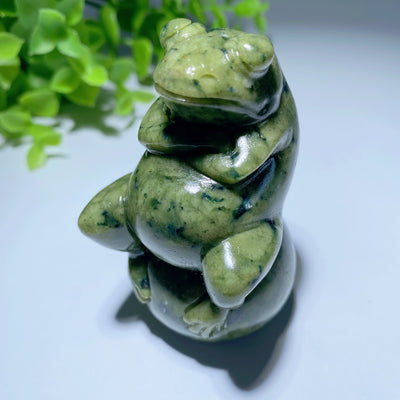
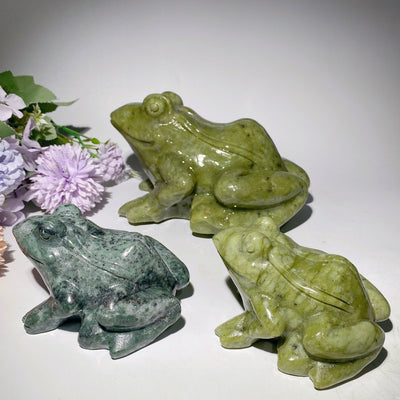
Authentic Nephrite often has a greasy, fibrous luster, while Jadeite has a vitreous (glass-like) shine. In contrast, serpentine stone often feels "waxier" to the touch and may look slightly oily. Furthermore, looking closely at the inclusions can help. Serpentine frequently has white or black inclusions that look like clouds or spots, distinct from the fibrous interlocking structure of Nephrite.

Metaphysical Properties: What is Serpentine Good For?
Just because Xiuyan jade and New Jade are not "true" jade doesn't mean they lack spiritual power. In fact, many crystal healers prefer serpentine jade benefits for specific energy work.
Kundalini Awakening
The serpentine stone is famously linked to the Kundalini energy—the coiled serpent power at the base of the spine. It is believed to help safely arouse this energy, facilitating spiritual awakening and clearing blocked chakras along the central channel.
Emotional Cleansing
New Jade is excellent for soothing the emotional body. It helps to clear stagnant energy and allows you to look at life with a fresh perspective. Unlike the intense, sometimes heavy energy of dark Nephrite, New Jade offers a lighter, breezy vibration that encourages growth and new beginnings.
Protection and Wisdom
Historically, serpentine was carried as an amulet against snakebites and poison. Metaphysically, this translates to protection against "poisonous" behavior, malice, and negative thoughts. It is a stone of wisdom, helping you shed your old skin and embrace transformation.
For a deeper dive into mineral identification, resources like the Gemological Institute of America (GIA) provide extensive data on separating jade from its simulants.
Tools for Transformation & Authenticity

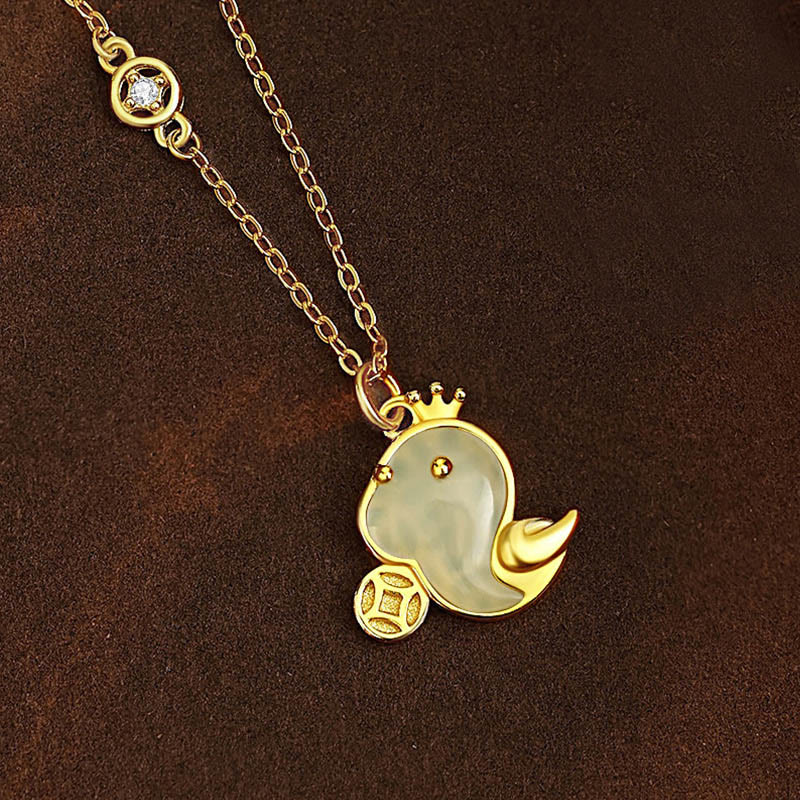
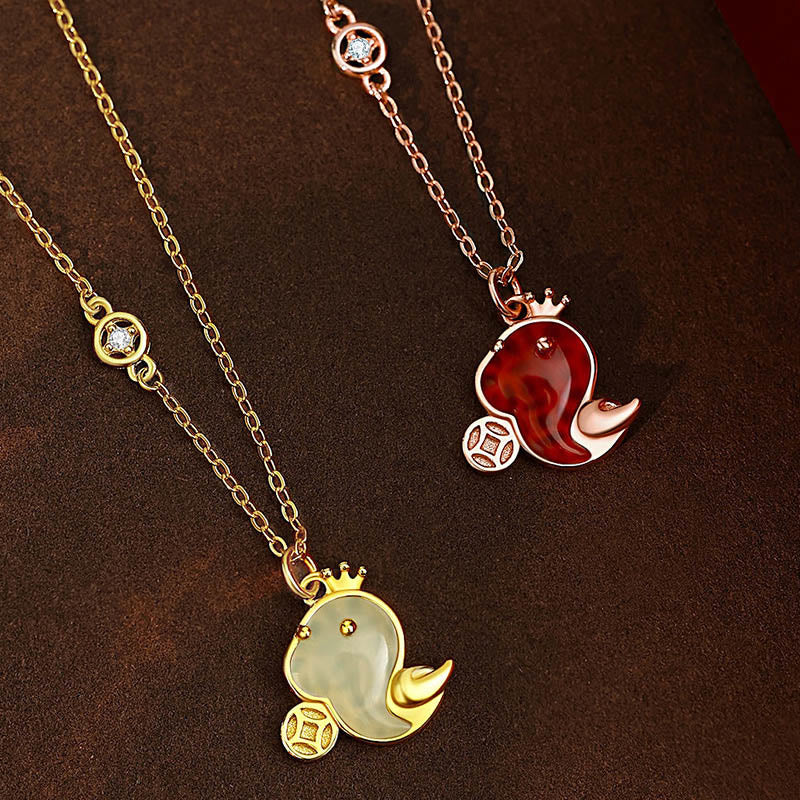
Wear this detailed snake ring as a talisman for wisdom and transformation—perfect for those drawn to jade’s spiritual symbolism. Learn more ➔

Showcase the beauty of real nephrite with this Hetian jade pendant—a meaningful choice amid common simulants like serpentine and new jade. Learn more ➔
Consumer Guide: Buying with Awareness
When shopping for crystals, knowledge is your best defense. There is absolutely nothing wrong with buying a beautiful Xiuyan jade carving or a New Jade tumbled stone, provided you know what you are buying and are paying a fair price. Serpentine is abundant and should be significantly more affordable than high-quality Nephrite or Jadeite.
Be wary of sellers who claim a stone is "ancient jade" but sell it for a very low price. Authentic jade holds its value. If you are seeking the stone specifically for the serpentine jade meaning of transformation, then a high-quality serpentine piece is exactly what you need. Mindful selection involves examining the stone, feeling its energy, and ensuring the seller is transparent about the mineral's identity.

Conclusion
Whether you are drawn to the deep historical roots of Xiuyan jade, the fresh vibrancy of New Jade, or the transformative power of the serpentine stone, each of these minerals offers unique gifts. They may be jade simulants by geological definition, but spiritually, they stand tall as stones of healing, Kundalini awakening, and protection. By understanding the differences, you can curate a crystal collection that is both authentic and aligned with your personal journey.
Frequently Asked Questions about Serpentine and Jade Simulants
No, scientifically, serpentine jade is not real jade. "Real jade" refers only to Jadeite and Nephrite. Serpentine is a different mineral group (magnesium silicate) that is softer and more abundant, often used as a simulant.
Serpentine jade is valued for its ability to clear blocked energy and activate the Kundalini. It is also an excellent stone for emotional cleansing, correcting imbalances, and aiding in meditation.
The main difference is hardness and composition. Jadeite is very hard (6.5-7 Mohs) and durable, while serpentine is much softer (2.5-5.5 Mohs) and can be scratched by a knife. Jadeite also has a glassier luster compared to serpentine's waxy sheen.
Spiritually, serpentine is known as a stone of transformation. It assists in shedding old patterns, much like a snake sheds its skin, and is powerfully connected to Earth energy and the awakening of inner wisdom.
You can identify them by performing a scratch test (serpentine scratches easily), examining the luster (look for a waxy appearance), and observing inclusions. New Jade is typically a lighter, lime-green variety of serpentine, while Xiuyan is a darker, translucent variety often used in Chinese carvings.